
How to Find a Reliable Pilates Equipment Supplier at a Fitness Trade Show?
A fitness trade show can put dozens of Pilates equipment suppliers within a few exhibition halls. For a studio owner, distributor, fitness chain or private-label brand, that sounds like the perfect sourcing opportunity.
The difficulty is that trade shows are designed to make suppliers look good.
Reformers are carefully prepared. Booths are professionally designed. Sales teams know their key selling points. Almost every exhibitor can offer an attractive quotation, and many will say they support OEM, fast delivery and long-term warranty.
So the real value of a trade show is not simply seeing more Pilates equipment in one place. It is being able to look beyond the display and understand what kind of supply capability sits behind it.
A reliable supplier should be able to do more than produce an impressive reformer for an exhibition. It should be able to reproduce that quality across a commercial order, deliver it on schedule, provide parts and technical support after delivery, and meet the requirements of the market where the equipment will eventually be sold or used.
That is what buyers should be looking for on the show floor.
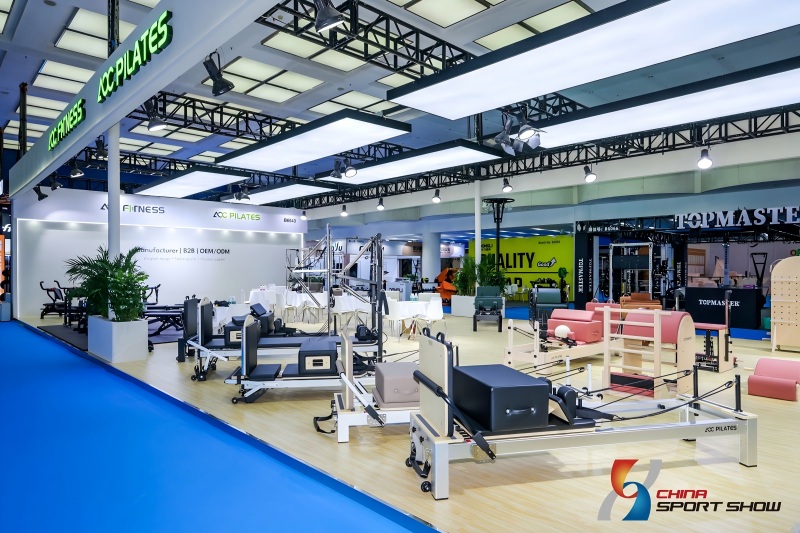
1. Start With Your Pilates Equipment Project, Not the Exhibition Hall
Walking into FIBO, IWF or another large fitness trade show without a clear sourcing target makes almost every booth look relevant.
The better approach is to decide what your project actually needs before comparing suppliers.
A boutique studio opening with twelve reformers has a very different purchasing profile from a distributor ordering several containers a year. A rehabilitation facility may place greater emphasis on adjustability and specific product requirements, while a private-label buyer may care about branding, upholstery, packaging and long-term production consistency.
1.1 Commercial Pilates Equipment Has Different Priorities
For a commercial Pilates studio, equipment has to perform repeatedly, not occasionally.
A reformer that feels excellent during a five-minute exhibition trial still needs to feel consistent after months of daily classes. That makes frame stability, carriage movement, spring performance, adjustment mechanisms and replacement parts more important than decorative details.
Distributors and OEM buyers have another concern: repeatability. If the first order sells well, they need to know whether the next batch can arrive with the same dimensions, finish, components and performance.
This is why the sourcing process should begin with the intended use, order volume, target market, required equipment range and level of customization. Once those are clear, the exhibitor directory becomes much more useful. Instead of trying to visit every Pilates booth, buyers can focus on suppliers that appear capable of supporting the actual project.
2. Look Past the Appearance of a Pilates Reformer
The equipment is still the best place to start once you reach a booth.
A reformer tells you quite a lot about the manufacturer's priorities if you know where to look. Instead of judging it primarily by upholstery color, frame design or overall styling, spend time on the areas that will actually be working every day.
2.1 Test the Reformer Where Commercial Use Creates Wear
Push the carriage slowly through its complete travel, then repeat the movement several times. Movement should feel controlled and consistent. Listen for unusual noise and feel for lateral movement, sudden changes in resistance or instability.
Then look underneath and around the machine.
Rails, wheels, bearings, pulleys, ropes, springs and connection points often tell a more useful story than the top of the reformer. Operate the footbar, headrest and other adjustable components as an instructor or studio member would. These are high-contact parts, and small weaknesses become much more important under commercial use.
The same applies to upholstery. Look at the stitching, corners, surface tension and finishing rather than simply whether the material feels soft.
If a booth has several reformers, try more than one.
That small step matters because the most impressive machine on the stand may have been specially prepared for the show. If three units of the same series show similar finishing, movement and assembly quality, you are beginning to see evidence of consistency rather than one excellent sample.
And consistency is where supplier evaluation really begins.
3. A Reliable Pilates Equipment Manufacturer Must Repeat the Sample Quality
The reformer at the show is one machine.
Your order may be 20, 50 or 100.
That changes the sourcing question completely.
A supplier does not become reliable because it can make one good sample. It becomes interesting when it can explain how the same standard is maintained when production moves from a sample to a batch.
3.1 Move the Conversation From the Showroom to the Factory
This is the point where a useful booth conversation should naturally move behind the product.
Where does the aluminum, steel or timber come from? Are the springs produced to a defined specification? Which components are made in-house and which are sourced? What happens when incoming materials do not meet the required standard? At what stages is the reformer inspected?
A genuine Pilates equipment manufacturer should be comfortable discussing these details.
More importantly, the answers should connect to an actual production system. Quality control is more convincing when the supplier can show inspection records, material specifications, testing procedures or production photos than when the sales representative simply says, “Our QC is very strict.”
Production capacity also needs context. A large monthly capacity sounds impressive, but the more useful issue is whether the factory can maintain quality when order volume rises and whether lead times remain realistic during busy periods.
For buyers planning repeat orders, one of the most revealing things to discuss is batch consistency.
The real product you are buying is not the reformer under the exhibition lights. It is the supplier's ability to make the next one—and the hundredth one—to the same agreed standard.
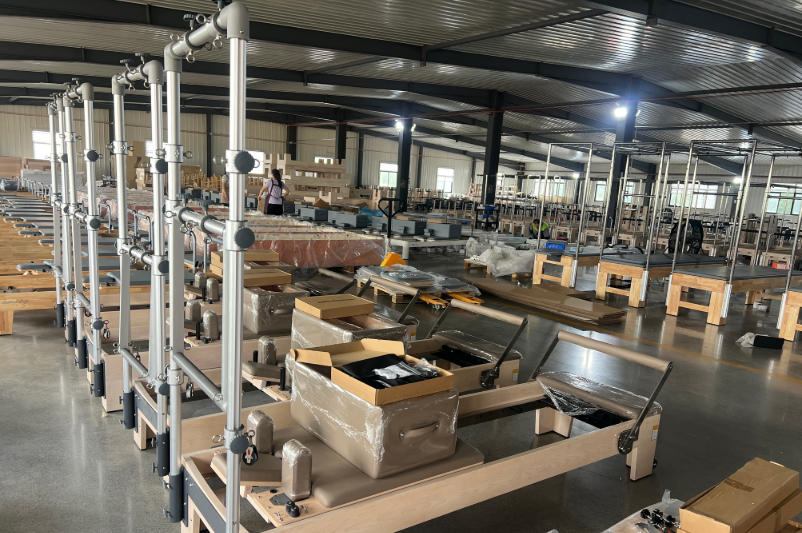
4. Pilates Equipment After-Sales Support Matters More Than a Long Warranty
This is where many supplier comparisons change.
Two companies may offer reformers that feel almost identical at the show. Their quotations may also be close. But six months after installation, when a wheel, rope, spring or adjustment component needs attention, the difference between them can become very obvious.
Pilates equipment is durable equipment, but it is not maintenance-free equipment.
4.1 Spare Parts and Technical Support Reveal the Real Supplier
A long warranty printed in a catalog sounds reassuring. What matters more is what happens when someone actually needs to use it.
A strong Pilates equipment supplier should know which parts are commonly replaced, keep appropriate spare parts available and have a clear way to diagnose problems. For international customers, remote technical support is especially important because sending an entire reformer back to the supplier is rarely practical.
This is also where some trading companies have an inherent weakness.
The problem is not simply that they do not manufacture the equipment. A capable trading company may be perfectly effective at sourcing, quotation, export documentation and shipment coordination.
The problem appears when it has no independent technical after-sales capability.
A customer reports a problem to the trader; the trader sends the information to the factory; the factory asks for additional photos or videos; the information comes back through the trader; and only then can a replacement part or solution be discussed.
For a commercial studio with a reformer out of service, that extra communication layer can become expensive very quickly.
So instead of concentrating too much on whether the company describes itself as a factory or trader, find out who will actually solve the problem after delivery.
A supplier that can explain its troubleshooting process, spare-parts inventory and replacement procedure is giving you much more useful information than one offering a vague “five-year warranty.”
Warranty is the promise. After-sales capability is what makes the promise work.
5. OEM Pilates Equipment Requires More Than a Logo
Customization is another area where trade-show conversations can become misleadingly simple.
Almost every Pilates equipment supplier can change a logo or upholstery color. That does not necessarily make it an experienced OEM or ODM manufacturer.
5.1 Good OEM/ODM Suppliers Understand the Limits of Customization
There is a major difference between changing the appearance of a reformer and changing the product itself.
Upholstery colors, logos and packaging are relatively straightforward. Changes to dimensions, spring configurations, structural components or functional combinations can affect production, testing, cost and sometimes compliance.
A mature OEM Pilates equipment supplier understands those consequences.
Instead of agreeing immediately to every idea, the supplier should be able to explain how a requested modification affects sample development, MOQ, engineering work, production time and final testing.
That response may sound less exciting than “Yes, we can customize everything,” but it is usually far more valuable.
For buyers building their own Pilates equipment brand, the goal is not to find the factory willing to change the most things. It is to find one capable of turning an approved design into a stable, repeatable product.
6. Pilates Equipment Compliance Now Extends to Packaging
For international sourcing, a good machine and a capable factory are still not enough.
The equipment must be suitable for the market where it will be sold, which means buyers need to look at the documentation behind the product as carefully as the product itself.
6.1 Match Product Documents to the Actual Pilates Equipment
Certification logos on booth walls should never be treated as the end of the compliance discussion.
Relevant test reports and technical documents need to correspond to the actual product, materials and configuration being purchased. This becomes particularly important with OEM projects because changing materials or structural elements may change what documentation is applicable.
A professional supplier should understand this relationship instead of treating one certificate as something that automatically covers every reformer in its catalog.
6.2 Do Not Ignore Pilates Equipment Packaging Compliance
Packaging also deserves much more attention than it once received, particularly for products entering markets such as Europe where packaging requirements are becoming more structured.
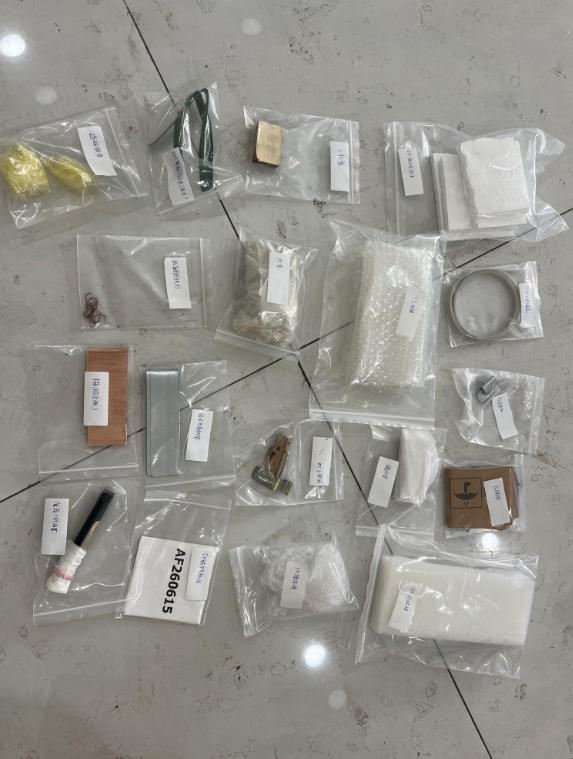
A Pilates reformer may arrive inside a system containing cartons, plastic film or bags, foam, cushioning, straps, labels and sometimes wooden packaging. Those materials are part of the delivered product system and need to be managed accordingly.
For buyers, the useful sign is not simply a supplier saying its packaging is “eco-friendly.”
It is whether the company actually knows what materials it uses, keeps material specifications, can trace packaging suppliers and can arrange relevant testing or documentation when required.
This becomes even more important for OEM orders using customized branded packaging. Changing the box, foam, plastic or other packing materials should be managed as a supply-chain change, not treated as a graphic-design decision alone.
7. Compare Pilates Equipment Suppliers Only After You Understand What You Are Comparing
By the second day of a large trade show, buyers may already have a bag full of catalogs and a phone full of quotations.
This is usually when price begins to dominate the conversation.
It should not—at least not yet.
A €50 or $100 difference between two reformers means very little if one supplier offers stable batch production, accessible replacement parts and competent technical support while the other cannot provide the same level of support.
The same applies to booth size. A large, impressive stand shows that a company has invested in the exhibition. It does not tell you how its production line operates on an ordinary Tuesday three months later.
The most useful comparison is therefore based on the whole supply picture: equipment quality, manufacturing consistency, production capacity, OEM capability, after-sales support, spare parts, compliance and finally commercial terms.
Once those elements are comparable, price becomes much more meaningful.
8. Use the Fitness Trade Show to Build a Shortlist, Not Make the Final Decision
A trade show is excellent for reducing uncertainty, but it should not be expected to remove all of it.
The goal might be to turn fifteen possible Pilates equipment suppliers into four serious candidates—not necessarily to sign a container order before leaving the exhibition center.
8.1 Verify the Pilates Equipment Factory After the Show
Once the exhibition is over, the strongest candidates can move into deeper verification.
Documents collected at the booth can be checked against the exact models under consideration. Samples can be ordered or trial orders arranged. For larger orders, a factory visit, remote factory audit or independent third-party inspection can provide a much clearer view of production conditions and quality-control procedures.
Pre-shipment inspection adds another important layer because it brings the sourcing process back to the question that began at the trade show: does the mass-produced equipment actually match what was approved?
The exhibition helps you understand what a supplier can show.
The work after the exhibition helps you establish what it can consistently deliver.
9. Conclusion: Find the Supply System Behind the Pilates Reformer
Finding a reliable Pilates equipment supplier at a fitness trade show is not about discovering the most impressive reformer in the hall.
The reformer is simply where the investigation begins.
Follow it backwards into materials, components, manufacturing and quality control. Then follow it forwards into delivery, spare parts, technical support, OEM production and compliance.
That is how a visually attractive exhibition sample becomes—or fails to become—a reliable commercial supply relationship.
For a studio buying its first equipment package, a distributor building a regional product line or a brand developing OEM Pilates equipment, the principle is the same:
Do not choose only the reformer you like at the show. Choose the supplier that can make it consistently, deliver it reliably and still support it long after the exhibition is over.


Trending Now
-

Types of Pilates Reformers: How Material, Frame Structure, and Environment Define Function
2026-09-10 10:29:31 -

Wood vs Aluminum: Which Pilates Reformer Is Right for Your Studio
2026-09-10 10:20:07 -

Why Maple & Oak Are the Go-To Woods for Wooden Pilates Reformers
2026-09-10 09:53:30 -

What to Look for When buying a Pilates reformer?(It’s Not Just the Wood& Leather)
2026-09-04 14:22:24 -

How to Choose Pilates Reformer Tracks: Aluminum vs Stainless Steel
2026-09-04 14:14:55 -

How Much Space Do You Need Around a Pilates Reformer In Studio?
2026-01-26 13:47:29