
Types of Pilates Reformers: How Material, Frame Structure, and Environment Define Function
1. Introduction: Starting From Materials, Not Labels
Within the Pilates equipment system, the Reformer is undoubtedly the most iconic apparatus. It embodies nearly all core Pilates principles—strength, control, stability, precision, and length.
Yet in real practice, people often focus on exercises themselves while overlooking a fundamental fact: the experience of using a Pilates reformer is largely determined at the moment it is designed and built, through its materials and frame structure.
Whether a reformer feels stable or quiet, whether it can withstand long-term, high-frequency use, and even whether it visually appears more like furniture or athletic equipment, all originate from its most basic construction.
In established Pilates studios such as Pilates Central in Islington, reformer selection is closely tied to frame stability, material quality, and long-term structural reliability rather than surface-level features.
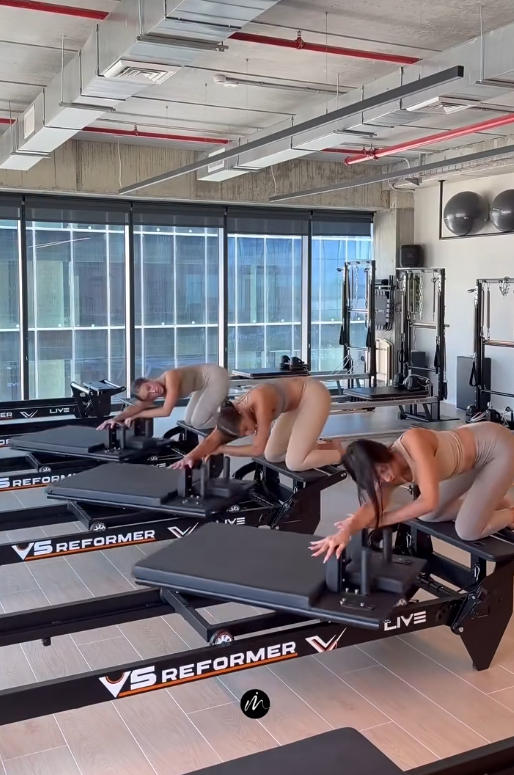
Pilates reformers are primarily classified by frame material—wood or aluminum—with structural variations such as classic, folding, tower, Cadillac, low-leg, full-track, and more recent multidirectional carriage designs(Live Equipamentos V5 REFORMER 360).
Instead of beginning with surface-level distinctions such as “home or commercial,” “foldable or fixed,” or “with or without tower,” it is more coherent to follow a clearer main line by understanding Pilates reformer types through their frame materials and structural evolution.

2. Frame Pilates Reformer: The Structural Foundation of All Types
Every Pilates reformer is, at its core, a frame Pilates reformer. The frame supports dynamic loads, spring resistance from multiple directions, and continuous carriage movement. Its rigidity, alignment, and durability determine not only performance but also the reformer's structural evolution.
From this perspective, modern reformers can be broadly divided into two primary material systems:
Wood Pilates reformer
Aluminum Pilates reformer
All other categories—classic reformers, folding reformers, tower systems, Cadillac hybrids, and commercial machines—naturally develop from these two material foundations.

3. Wood Pilates Reformer: The Structural Origin of the Reformer System
3.1 Pilates Wood Reformer as the Original Form
Historically, the Pilates wood reformer represents the original form of the apparatus.
Early Pilates equipment relied almost entirely on wood,not only because of technological limitations but also because wood offers natural advantages well suited to Pilates movement: shock absorption, controlled rebound, and long-term structural stability.
For this reason, even today, many professional studios instinctively associate quality and authenticity with a solid wood Pilates reformer.
3.2 Maple Pilates Reformer and Oak Pilates Reformer
Among wooden frames, not all hardwoods perform equally. In today’s market, the maple Pilates reformer and oak Pilates reformer models have become the dominant standards.
Maple Pilates Reformer
Maple is valued for its fine, uniform grain, dimensional stability, and machining precision, which support smooth carriage travel and long-term structural consistency. Its use in premium models such as Merrithew’s NX3 MAX shows that maple remains well suited to modern Reformer engineering.
Oak Pilates Reformer
Oak is denser and heavier, with a more pronounced grain and stronger visual presence. An oak Pilates reformer feels grounded and powerful, making it well-suited for larger studios and facilities operating as commercial reformer Pilates environments with continuous daily use.
Different wood species vary significantly in mechanical properties, which affects their utility in various applications. Springer Link
Beech wood, while historically common, has gradually been phased out of the premium segment due to limitations in long-term load resistance and environmental adaptability.(There are still quite a few Reformers on the market clearly labeled as being made of beech wood. For example, Elina Pilates’ currently available Lignum series explicitly states that it features a light-colored beech wood frame and is positioned for both home and commercial use.
By contrast, leading international brands in recent years have focused more on promoting solutions made from maple, aluminum alloy, and steel. For instance, Align-Pilates specifies that its high-end M8-Pro model is made of maple, while Merrithew’s professional line places greater emphasis on professional commercial use, durability, and coverage across multiple models, rather than promoting beech wood as a flagship material.)
3.3 Solid Wood vs. Composite Wood Frames
More important than wood species is whether the reformer is constructed from true solid wood. High-quality wooden reformers use solid hardwood or structurally reinforced laminated sections that are carefully dried and engineered.
Lower-cost alternatives may rely on composite boards or veneer-covered frames. While visually similar at first glance, these materials are far more prone to noise, loosening, and structural fatigue under high-frequency use.
Professional studios including Studio Anatomy in Islington typically favor solid wood reformers for their mass, quiet operation, and consistency under continuous daily use.

4. From Horizontal to Vertical: Tower Reformer Pilates as a Natural Extension
As Pilates practice evolved, the reformer expanded beyond purely horizontal movement. This led to the development of the tower reformer Pilates system.
By adding vertical posts, springs, and bars to the reformer frame, the apparatus moved into three-dimensional space. This structural shift enabled standing exercises, assisted stretching, suspension movements, and rehabilitation-focused work that were not possible on a standard reformer alone.
However, vertical loading fundamentally changes the forces acting on the frame. Continuous upward and backward tension increases torsional stress, demanding greater rigidity. This is why solid wood frames—particularly maple and oak—naturally became the preferred foundation for tower reformers.
5. Tower Reformer Pilates: Vertical Expansion Begins on Both Material Systems
The introduction of the tower reformer Pilates system represents the first major vertical expansion of the reformer. At this stage, the apparatus begins to operate not only along the horizontal rails, but also upward and diagonally, introducing new force vectors into the frame.
Both wood and aluminum Pilates reformer systems can support tower functionality, but they respond to vertical loads differently.
Solid wood frames—particularly maple Pilates reformer and oak Pilates reformer constructions—absorb vertical tension through mass and material elasticity. Aluminum frames, by contrast, rely on engineered reinforcement and precise joint design to maintain rigidity while preserving a lighter overall structure.
At the tower stage, these two material paths still coexist. The reformer has expanded vertically, but it has not yet reached the point where structural freedom must be sacrificed.
6. Cadillac Reformer Pilates: Where Material Paths Diverge
As tower functionality continues to expand, the reformer gradually transitions into a Cadillac reformer Pilates system. This is the point at which the two material paths begin to diverge structurally.
Pilates equipment evolved over time from simple wooden frames to include a variety of apparatus, demonstrating structural innovation in the Pilates method. oneartpilates.com
Cadillac configurations introduce sustained suspension, hanging exercises, and multi-directional loading that dramatically increase torsional stress on the frame.
At this level, mass and rigidity become dominant requirements.
For this reason, most full Cadillac reformers are built on heavy-duty wood frames or reinforced hybrid constructions. (A Cadillac reformer is a type of reformer with an overhead structure for advanced suspension and support work.) Solid maple and oak provide the inertia and long-term stability needed for continuous vertical loading.
Aluminum reformers, while technically capable of supporting advanced tower systems, reach a point of diminishing returns. The additional reinforcement required to handle full Cadillac loads often reduces the advantages of lightness and modularity that define aluminum systems in the first place.
This divergence does not reflect superiority or inferiority—it reflects different structural destinies shaped by material behavior.

7. Aluminum Pilates Reformer: Environmental Adaptability Compared with Wood Frames
Within the Pilates reformer system, the aluminum Pilates reformer represents a different approach to environmental adaptation compared with wood-based frames, rather than a lower or transitional stage.
In environments with dynamic space conditions, such as urban apartments, shared training rooms, or multipurpose fitness areas, aluminum reformers perform better than wood reformers.
Their lighter weight and modular frame construction make relocation, temporary storage, and frequent repositioning practical, whereas solid-wood reformers are structurally optimized for a fixed location.
Aluminum reformers also demonstrate stronger adaptability in variable physical environments.
In regions with high humidity, coastal areas, or where air conditioning causes frequent temperature changes, aluminum frames maintain dimensional stability and alignment more consistently than wood.
Wood reformers, by contrast, perform best in controlled indoor environments where temperature and humidity remain relatively stable.
This contrast does not suggest that one material is superior to the other. Instead, it highlights how aluminum and wood reformers are optimized for different environmental conditions. Aluminum prioritizes flexibility and environmental tolerance, while wood prioritizes mass, stability, and long-term consistency in stable settings.
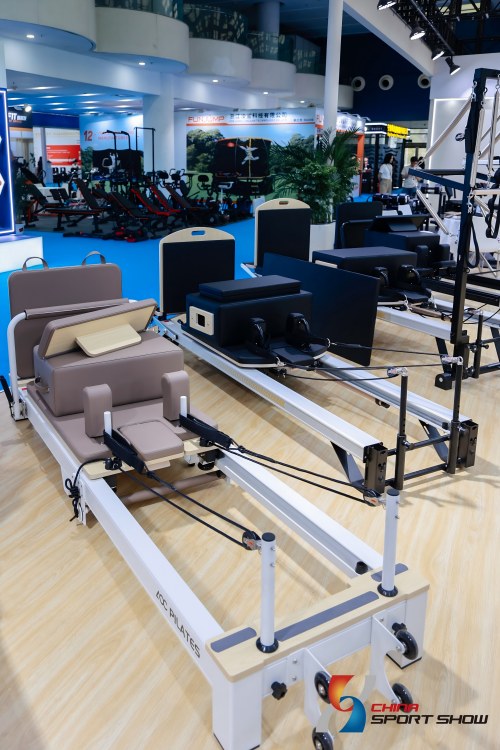
8. Classic, Foldable, Low-Leg, and Rail-Length Designs: Structural Adaptation Across Materials
Once material paths are clearly defined, reformer variations such as classic, foldable, low-leg, and rail-length configurations can be understood as structural adaptations to space, movement range, and training environment, rather than as isolated product types.
A foldable Pilates reformer operates primarily within horizontal or moderately vertical use ranges. Folding designs appear in both aluminum and wood systems.
Aluminum folding reformers emphasize portability and frequent storage, while foldable oak Pilates reformer and maple Pilates reformer designs preserve traditional movement quality while responding to limited space.
As structural load and usage intensity increase, folding mechanisms naturally give way to fixed frames that provide greater long-term certainty.
Low-leg (low-profile) Pilates reformers represent a height-based adaptation.
By lowering the frame, they reduce the user’s center of gravity and simplify mounting and transitional movements.
This configuration is particularly well-suited to rehabilitation settings, beginner instruction, and studios with ceiling or spatial height constraints.
Low-leg designs exist in both wood and aluminum systems and should be understood as an environmental response rather than a reduction in performance.
Rail length introduces another critical dimension of adaptability.
Reformers with full-track (long-rail) designs allow extended carriage travel, supporting a wider range of motion, smoother acceleration, and more natural movement patterns.
They are especially important in professional studios, commercial reformer Pilates machine environments, and when accommodating a Pilates reformer for tall people, where uninterrupted leg extension and body alignment are essential.
By contrast, fixed-track or short-track reformers limit the range of carriage travel. This design reduces overall footprint and simplifies spatial planning, making it suitable for compact environments or home use.
While movement range is intentionally constrained, fixed-track designs offer predictable resistance and controlled motion within their intended scope.
In this way, leg height, folding structure, rail length, and material choice form a unified structural system. Each parameter adjusts how the reformer responds to its environment, shaping not only how it fits into a space, but how movement itself is experienced.
Beyond rail length and frame height, newer Reformer designs are also beginning to reconsider the direction in which the carriage itself can move.

9. Rotating-Carriage Pilates Reformers: Beyond Linear Movement
Traditional Reformer carriages move primarily forward and backward along fixed rails. Newer designs introduce a rotating carriage, allowing the platform to change orientation while maintaining conventional carriage travel. Some systems can rotate through 360 degrees and can also be locked for standard Reformer exercises.
This additional movement freedom supports diagonal and transverse-plane movement, including rotation and anti-rotation training. It also introduces greater structural demands, since the rotational mechanism must remain stable, precise, and secure under load.
Rather than forming an entirely separate Reformer category, the rotating carriage can be understood as another stage in Reformer design evolution—alongside changes in frame material, rail length, height, and vertical attachments.
10. Conclusion: Material Defines Structure, Structure Defines Purpose
When viewed through the lens of material and frame design, the types of Pilates reformers form a coherent system rather than a fragmented list.
Wood frames support tradition, stability, and vertical expansion
Maple and oak define professional-grade performance.
Aluminum enables portability, flexibility, and folding.
Tower systems naturally evolve into Cadillac reformer Pilates structures.
- Rotating carriage systems further extend the Reformer from linear movement toward multidirectional training.
Ultimately, the real question is not which reformer type is “better,” but what role the reformer is meant to play—as a permanent studio apparatus, a commercial training system, or a flexible home solution.
Start with the frame, and the evolution of the Pilates reformer becomes clear.


Trending Now
-

Custom Aluminum Folding Pilates Reformer with a Removable Carriage
2026-09-10 10:00:55 -

Pilates Reformer Noise: Causes, Fixes & Maintenance Guide
2026-09-04 14:27:19 -

Reformer, Cadillac, Chair: How to Differentiate and Invest in the Right Pilates Equipment for Your Studio
2026-07-23 13:32:02 -

How to Build a Pilates Reformer: What “Commercial Grade” Means
2026-06-08 14:06:29