
Manual vs Retractable Pilates Reformer Ropes: Which Is Better for a Studio?
A retractable rope system sounds like a useful upgrade for a Pilates Reformer. It automatically takes up excess rope, keeps the machine tidy and reduces manual rope handling.
But many studio buyers do not automatically choose it.
From our conversations with Pilates equipment buyers, common concerns are straightforward: higher cost, more maintenance, and the possibility of the retraction mechanism sticking or jamming after repeated use. Some studios would rather use a simple manual rope system, especially when rope length does not need constant adjustment.
So the real difference is not “basic” versus “advanced.” It is simple manual adjustment versus automatic rope management—and the extra mechanism that comes with it.
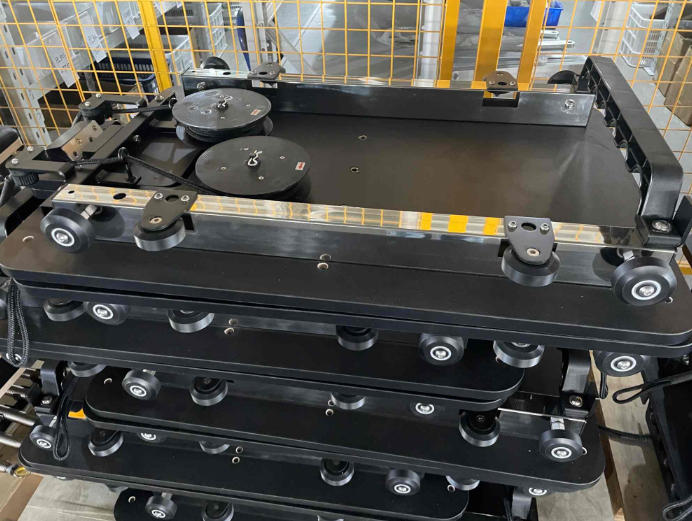
1. Manual vs Retractable Pilates Reformer Rope Systems
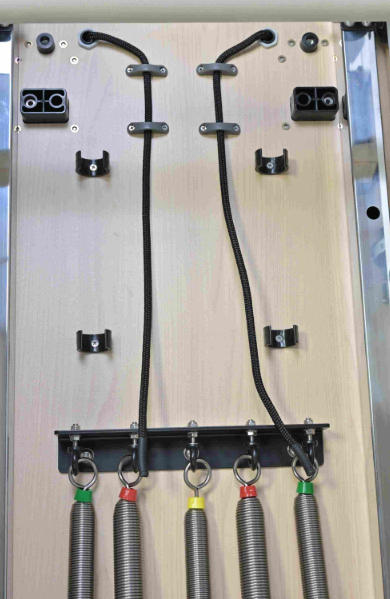
A manual Reformer rope system requires the instructor to set the rope length and secure it with a cleat or adjuster. When the rope is shortened, the excess rope is managed manually.
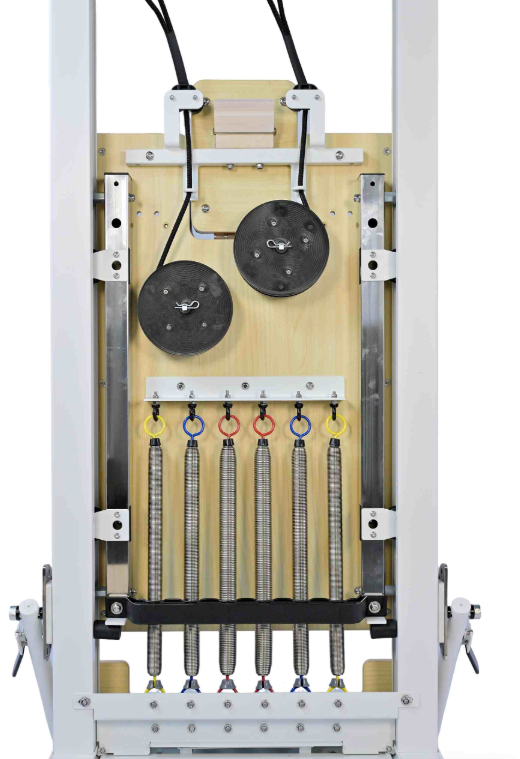
A retractable system adds a reel mechanism. When the rope is shortened, the unused length retracts into the system automatically.
That is its main function.
The retractable mechanism does not provide the primary exercise resistance—the Reformer springs still do that. It mainly makes rope adjustment and excess-rope management more convenient.
Both designs are used in established Pilates equipment.
Merrithew offers Traditional Rope Systems as well as Retractable Rope Systems with recoiling reels on professional Reformer models.
The question for a studio is whether automatic rope management provides enough benefit to justify the additional cost and complexity.
2. Why Some Pilates Studios Prefer Manual Reformer Ropes
The strongest advantage of a manual rope system is simplicity.
There is no retracting reel. The instructor adjusts the rope, locks it in position and manages any excess rope manually. With a good rope adjuster, this process does not have to be difficult or slow.
For many studios, rope length also changes less often than expected. Once a suitable setting is established, instructors may use it across many exercises before another adjustment is needed.
In that situation, automatic retraction may solve a relatively small problem.
This is particularly relevant when a studio is buying several commercial Pilates Reformers. A more complex rope mechanism adds cost to every machine, while the studio may receive little practical benefit if the automatic function is rarely needed.
Manual ropes also make maintenance more straightforward. There are fewer components involved, and the rope path and adjustment mechanism are easier to inspect.
For buyers who prioritize reliability and serviceability, that simplicity can be more valuable than automatic retraction.
3. Where Retractable Pilates Reformer Ropes Are Useful
Retractable ropes have one clear advantage: excess rope disappears automatically.
With a manual system, shortening a long rope leaves unused rope that must be stored or organized. With a retractable system, the reel takes up that slack.
This is useful when a studio:
changes rope length frequently;
uses longer ropes;
wants less loose rope around the carriage;
values a clean equipment setup.
Merrithew uses retractable rope reels on several professional Reformers, showing that the concept has an established place in commercial Pilates equipment.
But automatic rope storage should not be confused with better rope adjustment in every respect. A retractable system does not automatically guarantee that the left and right ropes are adjusted equally. That depends on the complete adjustment and locking design.
For studios, the main benefit remains simple: less manual management of excess rope.
4. Why Retractable Reformer Ropes Can Be Less Convenient in High-Use Studios
High-frequency use does not automatically make retractable ropes the better choice.
A busy Pilates studio needs fast adjustment, but it also needs equipment that works consistently throughout the day.
A retractable system adds reels, internal retraction components and additional rope routing. These parts operate every time the rope is pulled out or retracted.
With repeated use, the rope may not always rewind smoothly. Wear, dirt, incorrect routing or uneven winding can cause slow retraction, sticking or jamming. The mechanism therefore needs more attention than a simple manual rope system.
This creates a different kind of inconvenience.
An instructor may save some effort by not having to organize excess rope, but a sticking reel can take more time to deal with than a manual adjustment. If the mechanism needs servicing or replacement parts, maintenance cost and equipment downtime also become relevant.
This is why some high-use studios still prefer simpler systems.
Frequent use increases the need for easy adjustment, but it also increases the importance of reliability.
For commercial pilates equipment, those two requirements need to be considered together.
5. Quick-Adjust Reformer Ropes Offer a Middle Ground
Automatic retraction is not the only way to improve rope adjustment.
The Align-Pilates A8-Pro uses a Pro Rope Adjustment System that allows both ropes to be adjusted together, while still allowing individual fine adjustment.
This is an important distinction.
A studio may want:
faster rope-length adjustment;
easier left/right rope setup;
automatic storage of excess rope.
These are three different functions.
A retractable reel mainly solves the third. A well-designed quick-adjust manual system can improve the first two without adding an automatic retraction mechanism.
For a commercial Reformer, this can be a practical compromise: faster adjustment without making the rope system unnecessarily complicated.
6. Manual vs Retractable Reformer Ropes: Studio Comparison
Studio Consideration | Manual / Quick-Adjust | Retractable |
Rope adjustment | Manual, but can be quick | Convenient |
Excess rope | Managed manually | Automatically retracted |
Mechanical complexity | Lower | Higher |
Maintenance | Simpler | More components to maintain |
Sticking/jamming risk | No retracting reel | Possible in retraction mechanism |
Service and repair | More straightforward | Can involve reel mechanism |
Long-rope management | More manual handling | Easier |
Equipment cost | Simpler system | Added mechanism adds cost |
High-frequency use | Simple and predictable | Convenient if the mechanism remains reliable |
The main trade-off is clear: retractable ropes reduce rope handling, while manual systems reduce mechanical complexity.
7. Which Pilates Reformer Rope System Is Better for a Commercial Studio?
Choose based on the problem the studio actually needs to solve.
A manual rope system makes sense when the studio wants simple construction, straightforward maintenance and lower mechanical complexity. If rope length changes only occasionally, automatic retraction may add little value.
A retractable rope system makes more sense when excess rope is regularly inconvenient and automatic rope storage is important enough to justify the additional mechanism and maintenance.
A quick-adjust manual system can be a strong option for high-use commercial studios. It improves adjustment efficiency without relying on an automatic reel.
For busy studios in particular, automatic does not necessarily mean more convenient over the long term. A feature that saves a little effort during adjustment can lose that advantage if it requires more maintenance or starts sticking during daily use.
The goal is therefore not maximum automation.
For a commercial Pilates Reformer, the better rope system is the one that is quick to adjust, reliable under repeated use and simple enough to maintain.


Trending Now
-

The Value of Removable Legs in Modern Aluminum Pilates Reformers
2026-09-10 09:58:46 -

Why Anodized Aluminum Rails Are Ideal for Maple Pilates Reformers
2026-09-10 09:50:20 -

Pilates Reformer Noise: Causes, Fixes & Maintenance Guide
2026-09-04 14:27:19 -

Wunda Chair Springs and Pedals: How Resistance Really Works
2026-08-31 10:03:00 -

Custom Pilates Chair with Internal Steel Reinforcement
2026-08-20 09:01:51 -

How to Choose a High-Quality Pilates Spine Corrector
2026-07-21 15:44:43