
Wood Pilates Weights vs Silicone: A New Trend in Pilates Accessories
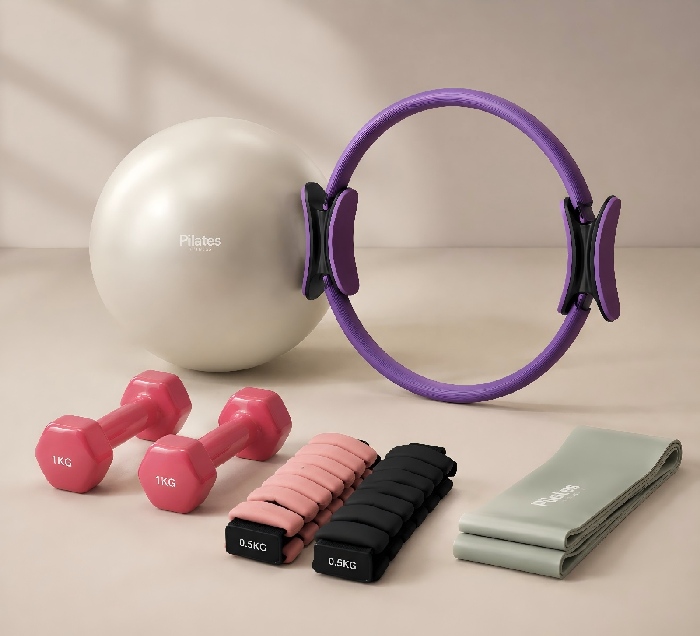
Pilates hand weights are hardly a complicated product. They need to provide manageable resistance, feel comfortable during repeated movements, and hold up to regular use. For years, silicone-coated and neoprene dumbbells have done that job well.
Yet wooden hand weights are beginning to appear alongside them.
The difference is particularly clear at Paragon Studio. The British equipment brand offers silicone-finished Pilates Sculpt Hand Weights in 1kg and 2kg options, starting at around £63 per pair. Its 2026 catalogue also features a wooden and metal hand-weight collection, with 1kg, 2kg and 3kg pairs arranged on a portable rack, starting at £1,030 excluding VAT.
Those prices are not directly comparable: one is a pair of weights, the other a six-weight set with storage. Still, seeing both products from the same supplier raises a useful question. What makes wood worth considering when silicone already meets the demands of Pilates training?
1. Why Silicone Pilates Weights Remain Popular
The appeal of silicone becomes obvious during an arm series. Even a light weight can become demanding when held through several minutes of controlled raises, circles and pulses. A secure grip and comfortable surface matter more than an elaborate design.
Bala Bars illustrate how far this familiar construction can be refined. Available in 1lb, 2lb and 3lb versions, they combine a steel core with a soft silicone exterior. Rather than using conventional round dumbbell heads, Bala distributes the weight through a compact, elongated shape. The design addresses handling and appearance without abandoning the advantages of silicone.
Professional Pilates equipment also comes in other forms. Merrithew's STOTT PILATES Toning Balls use a PVC shell filled with iron sand, allowing the user to hold a soft, compact weight in the palm. Its instructor-training programmes incorporate 1lb, 2lb and 3lb balls into Matwork exercises.
These products demonstrate why soft-coated weights are so established. They are relatively straightforward to manufacture, easy to handle and generally simpler to wipe down between users. For studios running multiple classes each day, those characteristics have practical value.
Wooden weights have to offer a convincing reason to move away from that familiar arrangement.
2. What Changes with Wooden Pilates Weights?
Wood changes the construction of a hand weight, not simply its appearance.
Because timber is much less dense than iron or steel, a compact wooden dumbbell generally needs another material to reach a useful training weight. Manufacturers can use metal components, concealed weight inserts or composite materials to achieve the intended resistance.
British brand INTI offers an interesting example. Its Ash Wood & Stone Dumbbells combine natural ash, stone composite and, in most weights, steel. The range runs from 0.5kg to 2kg, making it much closer to the weights commonly used in Pilates than conventional gym dumbbells.
The construction also affects grip. INTI uses a 4.6cm grip diameter across its range, with wooden ends surrounding the central stone-composite grip. Its design pays attention to how the weight sits in the hand rather than relying on a soft rubber coating.
There are trade-offs. INTI recommends periodic beeswax care for the wood and advises against use in commercial gyms. That doesn't make wooden weights unsuitable for exercise; it shows how much the intended environment influences material and finishing choices.
The same issue arises with sweat, cleaning products and accidental drops. A finished wooden surface can be smooth and comfortable, but it behaves differently from silicone. Surface protection, joint construction and grip geometry become essential parts of product development.
3. Alama Studio Takes Wooden Dumbbells Further
Alama Studio's Dumbbells offer a more architectural interpretation of the idea.
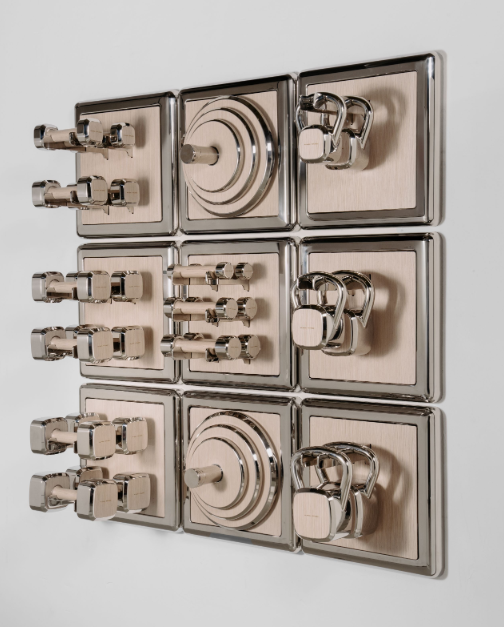
Instead of conventional rounded heads, Alama uses two squared heads with ALPI wood panels framed in 304L stainless steel. A turned handle connects them, with the weight concentrated close to the hand. The result is visually distinctive, but the proportions also reflect attention to balance and handling.
Customization is central to the design. Buyers can choose ALPI surfaces such as Striped White, Flamed Kakao or Wavy Fair Blue, paired with polished, satin, rose-gold or black-gun metal finishes.
The collection starts at €1,200 per pair, excluding VAT. Available fixed weights range from 4kg to 24kg in 2kg increments.
That weight range matters. Alama is not making a direct alternative to the 1lb or 2lb dumbbells typically used in light Pilates arm work. Its products sit closer to premium free-weight equipment, despite appearing under a Pilates-related product URL.
What makes the collection relevant is the thinking behind its construction. Alama leaves the wood and metal visible rather than concealing them beneath rubber. Matching finishes allow several weights to form a coordinated collection, including when placed on a shelf or storage system.
There is also a practical detail worth noticing. Alama recommends gentle cleaning with mild products, avoiding harsh chemicals and excess moisture. That care guidance would need consideration in any professional studio purchasing similar equipment.
The product demonstrates how much can be changed through shape, surface materials and storage design. It does not establish that the same construction would work unchanged for everyday Pilates hand weights.
4. Can Wooden Weights Work in Pilates Studios?
There is no reason wooden hand weights must be restricted to home exercise. Paragon Studio's wooden collection is specifically described as suitable for Pilates toning and light-weight exercises, and its portable rack is intended for display on a gym shelf or tabletop.
That is a different approach from INTI's more care-intensive home-oriented product, and it points to a distinction worth making: suitability for professional use depends on construction and testing, not wood alone.
For a boutique Pilates studio, matching wooden weights to a timber Reformer can make practical sense as part of a coordinated equipment purchase. A rack with clearly identified weights also helps instructors organize equipment before and after class.
However, appearance cannot compensate for poor handling. A studio-ready wooden dumbbell needs consistent weight accuracy, secure joints, a grip that remains manageable with damp hands, and a finish that tolerates the studio's actual cleaning routine.
The product should also withstand the way accessories are handled during class. Weights may be placed quickly beside a Reformer, set on a carriage or occasionally dropped. Exposed metal edges, damaged coatings and hard contact surfaces can become problems.
These are engineering questions that need testing. A wooden finish marketed as water-resistant does not automatically make the product compatible with every disinfectant.
For a studio owner, the choice ultimately comes down to how well the weights perform over hundreds of sessions, rather than how they look when first delivered.
5. Where Wooden Pilates Weights Fit the Market
The wider Pilates market provides a reason for manufacturers to explore variations in established accessories.
According to ClassPass's 2025 Look Back Report, Pilates was its most-booked workout for the third consecutive year, with reservations increasing 66% year over year. Reformer Pilates bookings rose 71% over the same period.
Those figures measure activity on ClassPass, not worldwide equipment sales. Nevertheless, they show strong participation in the kinds of classes where small accessories are regularly used.
For Reformer brands, wooden hand weights could be offered as an optional accessory alongside the machine, particularly where the frame, upholstery and other equipment already follow a coordinated design. They don't need to replace the standard silicone option. A customer may prefer silicone for regular class use while choosing wood for a private studio or a matching equipment set.
There is a clear distinction between the price levels already being offered. Bala demonstrates that design-conscious silicone products can command more than basic mass-market dumbbells. INTI shows that natural materials can be used at genuine Pilates training weights. Paragon offers wooden sets specifically described for Pilates, while Alama explores a considerably more expensive, heavier category.
Together, these examples suggest room for different approaches, but they do not yet establish how large demand for wooden Pilates weights will become.
For manufacturers developing the category, the important questions are therefore quite specific: Which weights are most useful in Pilates classes? How should the handle feel? Can the finish withstand daily cleaning? And how much additional cost will brands or studio operators accept?
Silicone remains a strong choice because it performs reliably at an accessible price. Wood gives manufacturers more freedom in material selection, visual consistency and product design, but also introduces durability and maintenance considerations.
A wooden Pilates dumbbell deserves a place beside conventional accessories when it is just as thoughtfully designed for the exercise as it is for the room in which it will be used.


