
Studio-Grade vs Commercial Pilates Reformers: Durability and Performance Compared
When shopping for a Pilates reformer for studio use, the terms “studio-grade” and “commercial” appear everywhere. They sound like two clearly defined equipment levels, with commercial reformers sitting above studio models in durability and performance.
The Pilates equipment market is not that simple.
There is no universal industry rule that defines a studio-grade reformer as one level and a commercial reformer as another. Manufacturers use terms such as studio, professional, light commercial, commercial, and rehab in different ways. In fact, some reformers marketed for commercial studios are officially classified by the same manufacturer as “Studio” equipment.
Align-Pilates is a useful example. Its A8-Pro appears in the brand’s commercial reformer range and is described as its flagship commercial reformer, yet the company’s comparison chart lists its usage/warranty category as “Studio.” The R8-Pro, meanwhile, is specifically classified as “light commercial,” with commercial use limited to 20 hours per week.
That overlap changes the way these machines should be compared. Instead of relying on the label, a professional buyer needs to look at usage capacity, frame and carriage construction, spring performance, wear components, adjustment systems, warranty coverage, and serviceability.
1. Studio-Grade vs Commercial Pilates Reformer: The Core Difference
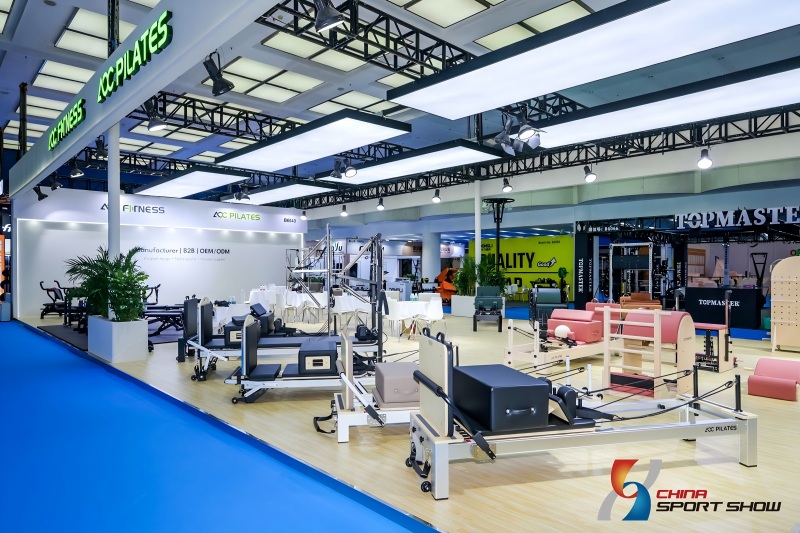
A studio-grade Pilates reformer is generally designed for professional Pilates instruction. It should be stable enough for regular client work, offer accurate spring resistance, provide smooth carriage travel, and support the range of adjustments expected in a dedicated Pilates studio.
A commercial Pilates reformer is also professional equipment, but the term usually places additional emphasis on sustained business use. This may include higher usage capacity, stronger wear components, faster adjustments, broader user accommodation, or easier maintenance.
The important word is “usually.” These are tendencies rather than fixed standards.
Balanced Body’s Studio Reformer demonstrates why the word “studio” should not be confused with light-duty equipment. Balanced Body currently provides a limited lifetime warranty on its standard wood Reformer frames, while its moving parts and springs carry separate, shorter warranty periods.
Merrithew approaches the market differently. It explicitly separates At Home, Professional, and Rehab Reformers. Its At Home SPX warranty becomes void when the equipment is used in a Pilates studio, gym, spa, or other commercial fitness facility. Its Professional and Rehab models are covered for their intended professional environments.
So the most useful distinction is not:
Studio = lower grade, Commercial = higher grade.
It is whether the individual reformer has been designed and supported for the level of professional use your facility requires.
2. Pilates Reformer Durability: Duty Cycle Matters More Than the Label
For studio owners, durability starts with workload.
A private instructor who teaches three sessions per day may put 15 to 20 hours of use on a reformer each week. A busy group studio can reach 40 hours or more. Even if both machines are described as professional reformers, they are operating under very different mechanical demands.
This is why Pilates reformer duty cycle is more meaningful than a commercial label.
Align-Pilates makes this especially clear with the R8-Pro. The manufacturer positions it as a light-commercial reformer and limits covered light-commercial usage to 20 hours per week. The same brand’s A8-Pro is a much larger 75 kg machine with a 150 kg maximum user weight, precision aluminum runners, eight polyurethane wheels, a rapid-change spring bar, and a 113 cm carriage travel length.
Neither specification automatically makes the A8-Pro “better” for every buyer. A smaller studio operating well below 20 hours per week may gain little from buying substantially more machine than it needs.
For a high-volume Pilates studio, however, operating capacity becomes increasingly important because every extra hour adds cycles to the carriage, springs, ropes, pulleys, footbar, and other moving parts.
2.1 Wood vs Aluminum Pilates Reformer Frames
Frame material is often used as shorthand for durability, but this can also be misleading.
Premium professional reformers are successfully built from both hardwood and aluminum. Balanced Body’s long-established use of wood in professional Reformers shows that a wooden frame can be fully suitable for commercial studio environments. Merrithew, by contrast, uses aluminum rails and structural components extensively in its Professional and Rehab lines and offers limited lifetime warranty coverage on specified rails, frame components, welding, and footbar mechanisms.
The more useful factors are frame rigidity, rail alignment, joint construction, carriage support, maximum user capacity, and manufacturing precision.
In other words, wood versus aluminum is a design choice, not a commercial-quality ranking.
3. Pilates Reformer Durability Depends on Springs, Wheels and Wear Parts
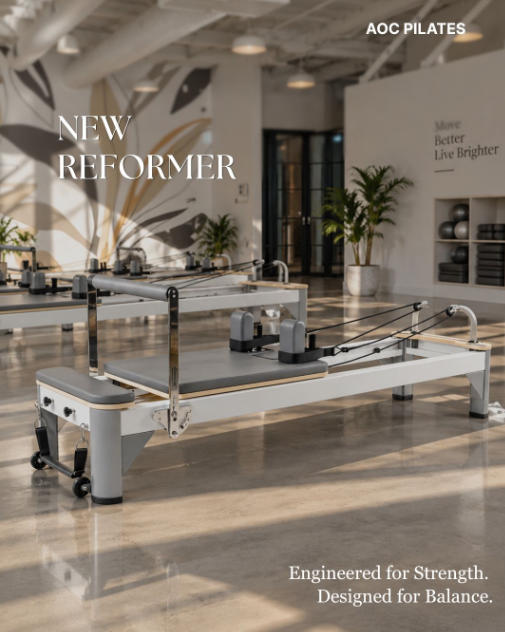
A reformer frame may last for many years, but the frame is not where most routine maintenance occurs.
Springs repeatedly stretch and contract. Wheels and bearings complete thousands of carriage cycles. Ropes pass through pulleys. Straps experience tension and friction. Upholstery is exposed to clients, sweat, clothing, and daily cleaning.
These components often reveal more about long-term ownership than the frame itself.
The warranty structure of major Pilates brands supports this point. Merrithew gives long coverage to the structural elements of its Professional Reformers, but ropes, rollers, straps, spring clips, and several other wear items receive one-year coverage, while upholstery receives 90 days. The company also states that springs on spring-loaded equipment should be replaced every two years to maintain safety, performance, and warranty coverage.
Balanced Body follows a similar logic. Its standard wood Reformer frames have much longer warranty coverage than moving parts or springs, and its Signature Spring warranty is shorter in group settings with five or more Reformers than in smaller installations.
For commercial buyers, this leads to a more useful definition of durability:
A durable Pilates reformer is not simply difficult to break. It should also have predictable wear, replaceable components, and readily available spare parts.
4. Pilates Reformer Performance: Carriage and Spring Systems Matter Most
Durability and performance should be evaluated separately.
A machine designed for heavy commercial use is not automatically smoother, quieter, or more pleasant to train on than a premium studio reformer. Pilates reformer performance is determined primarily by the engineering of the individual model.
The carriage is a good example. Smooth movement depends on the interaction between rails, wheels, bearings, alignment, lateral support, and frame rigidity. Simply counting the number of carriage wheels is not enough.
Align-Pilates uses eight polyurethane wheels on the A8-Pro and says the system is intended to improve performance while reducing maintenance. The machine also uses adjustable feet to keep the Reformer level, an important detail because rail alignment directly affects carriage movement.
Merrithew takes another approach. Its current Professional Reformers use two fixed and two floating wheels designed to run smoothly across aluminum rails.
Both systems can produce professional-level performance despite being mechanically different.
4.1 Pilates Reformer Springs and Resistance Feel
Spring design creates another major difference between Reformers.
Two machines may each have five springs, yet resistance can feel noticeably different because spring rate, length, preload, carriage geometry, and spring-bar position all influence the force experienced by the user.
This is also why comparing spring colors between brands is unreliable. There is no universal Pilates industry standard that makes a particular spring color equivalent across Balanced Body, Merrithew, Align-Pilates, and other manufacturers.
For instructors, spring quality is less about maximum resistance than about predictable resistance throughout the movement. Footwork, long stretch, rowing, feet in straps, and rehabilitation exercises all depend on consistent spring feedback.
This is one area where a high-quality studio reformer can perform every bit as well as a commercial model. Performance needs to be judged from the actual carriage and spring system, not from the category name.
5. Commercial Pilates Reformer Features Become More Valuable in Busy Studios
The benefit of a heavier commercial design becomes more obvious as client turnover increases.
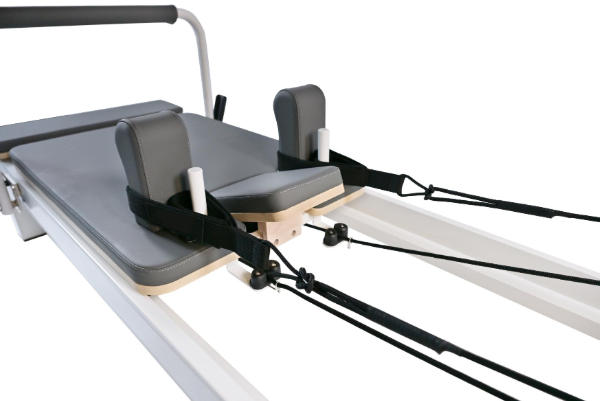
A professional Reformer may require changes to rope length, spring position, footbar height, carriage stopper, headrest, and accessories several times during a single class. Multiply those changes across eight or ten Reformers and several classes per day, and adjustment efficiency begins to affect studio operations.
Merrithew illustrates this difference within its own product range. Its Professional Reformers use a retractable rope system with self-locking cleats for quick, precise adjustment, while its At Home models use a traditional rope system that the company describes as more appropriate for a single user who does not need constant readjustment.
Align-Pilates follows the same principle with the A8-Pro. Its rapid-change spring bar allows carriage-position changes without first removing the springs, while its rope adjusters are positioned to make length changes quicker during studio use.
These features do not necessarily make a Pilates exercise more effective. Their value comes from making a professional studio faster and easier to operate.
User capacity can also become more relevant in commercial settings. A broader client base may require a longer carriage, wider platform, higher maximum user weight, or multiple frame heights. The A8-Pro, for example, supports users up to 150 kg and offers interchangeable leg heights, while Merrithew’s professional range includes different carriage widths and configurations designed for studio and rehab applications.
6. Pilates Reformer Maintenance and Warranty Affect Long-Term Studio Cost
Initial purchase price is only one part of the cost of professional Pilates equipment.
In a commercial environment, downtime matters.
A worn spring is inexpensive compared with losing class capacity while waiting several weeks for a replacement. The same applies to rollers, ropes, bearings, upholstery, or a damaged adjustment component.
This makes replacement-part availability and technical support important parts of the buying decision.
Warranty language also deserves careful attention. A “lifetime frame warranty” sounds impressive, but most routine service costs are unlikely to involve the frame. Buyers should compare coverage separately for the frame, carriage components, springs, wheels or rollers, ropes, straps, footbar mechanisms, and upholstery.
Merrithew provides a particularly clear example: its At Home SPX may have strong structural warranty coverage, but that warranty is void when the machine is used commercially.
This is why commercial-use warranty coverage matters more than the word “commercial” on a sales page.
7. Best Pilates Reformer for Studio Use Depends on Weekly Workload
The best Pilates reformer for studio use is ultimately the one that matches the facility’s workload.
For a private instructor or appointment-based studio, a premium studio-grade or light-commercial reformer can provide excellent long-term value. At relatively low usage levels, carriage feel, spring response, dimensions, exercise versatility, and instructor preference may matter more than maximum operating capacity.
A boutique studio running several classes per day needs a broader balance. Carriage performance still matters, but adjustment speed, professional warranty coverage, wear-part quality, upholstery durability, and spare-parts availability become increasingly important.
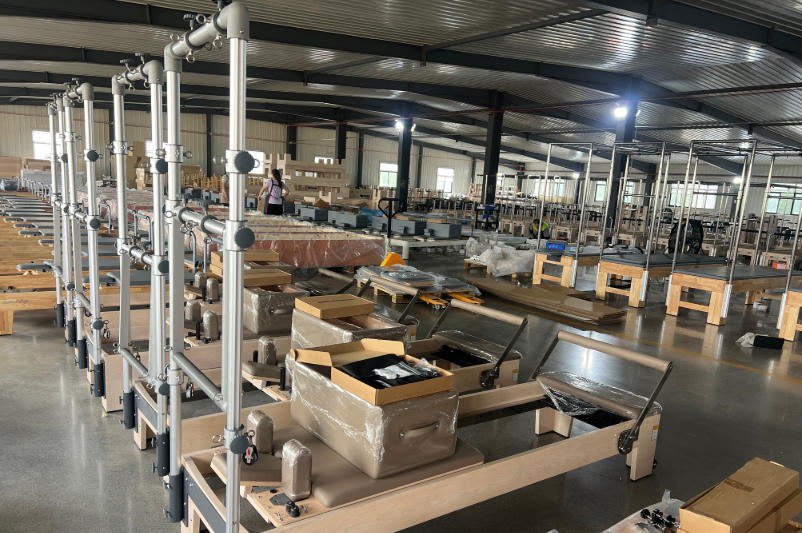
For a high-volume reformer studio, health club, hotel, or rehabilitation facility, the commercial case becomes stronger. Equipment may operate six to ten hours per day and serve clients of different heights, weights, and abilities. At that point, generous user capacity, efficient adjustment systems, robust moving parts, straightforward servicing, and dependable parts supply can justify a higher initial investment.
The decision therefore changes with utilization. A specification that provides little value at 15 hours per week can become essential at 50 hours per week.
8. Studio-Grade vs Commercial Pilates Reformer Comparison
Factor | Studio-Grade Pilates Reformer | Commercial Pilates Reformer |
Professional studio use | Common | Common |
Typical workload | Moderate to high | Often high to very high |
Frame durability | Can be excellent | Can be excellent |
Carriage performance | Model dependent | Model dependent |
Spring performance | Model dependent | Model dependent |
User capacity | Professional level | Often broader |
Fast adjustments | Varies by model | Frequently emphasized |
Wear-part design | Professional grade | Often optimized for heavier use |
Serviceability | Important | Critical |
Commercial warranty | Must be verified | Must still be verified |
Best fit | Private and boutique studios | Higher-volume professional facilities |
The table shows why there is no clean dividing line between the two categories.
Balanced Body proves that a product called a Studio Reformer can be serious professional equipment. Merrithew demonstrates how intended use and warranty can separate home equipment from professional Reformers even when structural quality remains high. Align-Pilates shows that even within a commercial product range, a light-commercial R8-Pro and an A8-Pro designed for studio use can have significantly different operating limits and specifications.
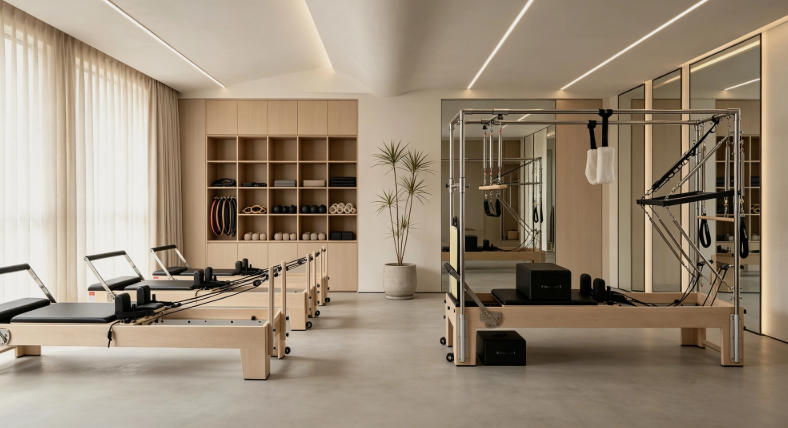
9. Studio-Grade vs Commercial Pilates Reformers: Final Verdict
The most important difference between studio-grade and commercial Pilates reformers is not a fixed gap in quality.
Both categories can offer durable frames, smooth carriages, professional springs, and excellent training performance. They also overlap heavily because Pilates brands do not use “studio” and “commercial” according to one universal classification system.
The differences become meaningful at the individual model level.
For durability, compare the intended workload, frame and rail construction, maximum user capacity, springs, wheels, bearings, ropes, and other wear components.
For performance, compare carriage smoothness, stability, spring response, travel length, and adjustability.
For commercial operation, add warranty coverage, adjustment efficiency, spare-parts availability, maintenance requirements, and potential downtime.
A studio-grade Pilates reformer may be fully capable of demanding professional use, while a reformer carrying a commercial label may still have limited-use conditions. That is why the product specification, warranty, and service system provide a much better measure of professional value than the category name alone.
For a Pilates studio, the right reformer is ultimately the one that combines the movement quality instructors expect with the durability and operating capacity the business actually needs.


Trending Now
-

How Are Commercial Gyms Adding Pilates Reformers to Their Equipment Mix?
2026-08-24 09:22:21 -

How Global Customers Choose Pilates Reformers for Studios
2026-08-03 10:05:24 -

Why Vertical Storage Pilates Reformers Are Popular in European Studios?
2026-05-09 09:40:04 -

How Much Space Do You Need Around a Pilates Reformer In Studio?
2026-01-26 13:47:29 -

Commercial Pilates Reformer Investment & ROI Guide
2026-01-20 11:13:57