
Stainless Steel vs Aluminum Pilates Tower: Which Is Better?
When choosing a Pilates Reformer with Tower, stainless steel and aluminum are the two frame materials most buyers compare. Stainless steel generally gives a more rigid feel, while aluminum reduces weight and can support more complex frame profiles and finishes.
For most standard Reformer Tower setups, stainless steel offers the stronger balance of stability, durability and value. Aluminum becomes more attractive when lower weight, easier handling or a specific aluminum-frame feature matters in daily use.
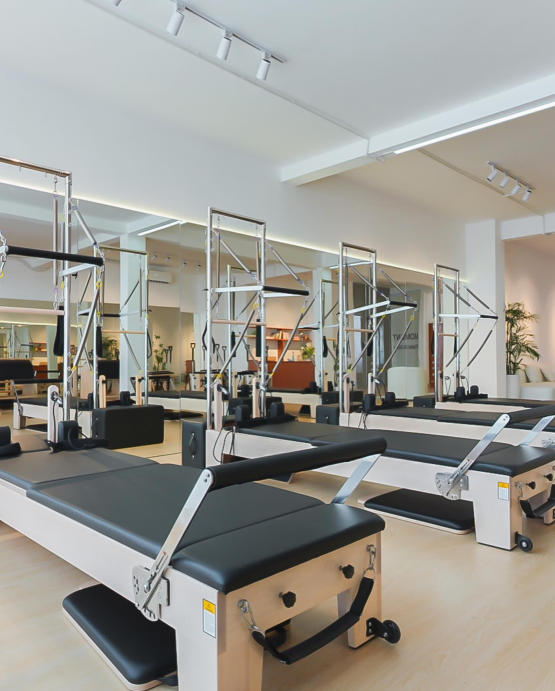
1. Pilates Tower Stability: Stainless Steel vs Aluminum
A Pilates Tower is loaded by springs attached at different heights and angles. During Leg Springs, Arm Springs and Push-Through Bar work, those forces pull the frame forward, sideways and diagonally. What users usually notice is not the theoretical breaking strength of the metal, but how much the Tower moves during normal exercise.
This is where stainless steel has an advantage. 304 stainless steel has an elastic modulus of about 200 GPa, compared with about 69 GPa for 6063 aluminum. With similar dimensions, stainless steel therefore resists elastic bending more effectively.
For a tall spring-loaded frame, that difference can translate into a firmer and more direct feel. Aluminum can still produce a very stable Tower, but the final result depends more heavily on the frame profile, joints and reinforcement.
For buyers comparing two similarly equipped Towers, stainless steel usually has the clearer advantage in rigidity.
2. Aluminum Pilates Tower Frame and Extra Reinforcement
The stainless steel and aluminum versions of a Tower are not always identical frames made from different metals.
In the aluminum Tower design we compared, an additional diagonal brace connects the vertical Tower to the Reformer frame, while the stainless steel version uses a simpler support structure.
That brace has a practical purpose. It creates a more triangulated structure and helps limit movement when springs pull on the upper section of the Tower. Part of the force can be transferred through the brace into the lower Reformer frame instead of being resisted only by the vertical posts.
This is a useful way to improve an aluminum frame, but the extra support should not be mistaken for proof that the aluminum version is inherently stronger.
If a stainless steel Tower can achieve the required rigidity with a simpler structure, the additional brace on the aluminum model is better understood as part of its structural solution, not necessarily an upgrade in training performance.
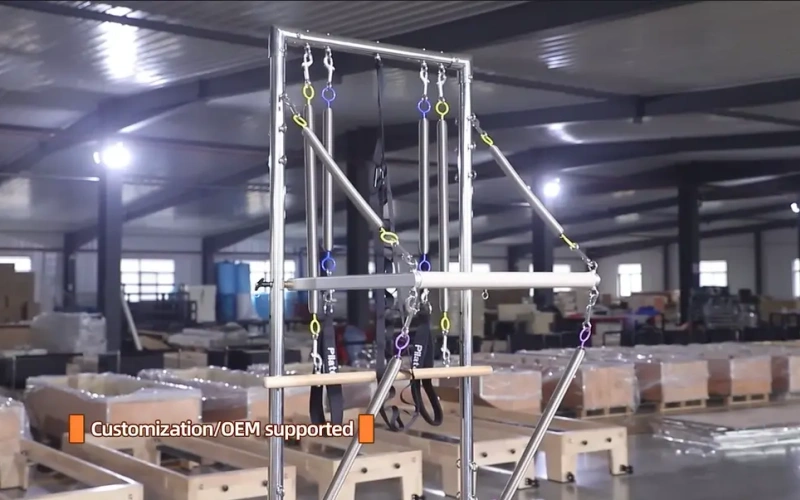
3. Removable Pilates Towers: Weight and Storage
Aluminum's clearest practical advantage is lower weight. Hydro lists the density of 6063 aluminum at about 2.70 g/cm³, while 304 stainless steel is about 7.9 g/cm³. Finished Tower weight will not differ by the same ratio because the structures are designed differently, but aluminum gives designers much more room to reduce weight.
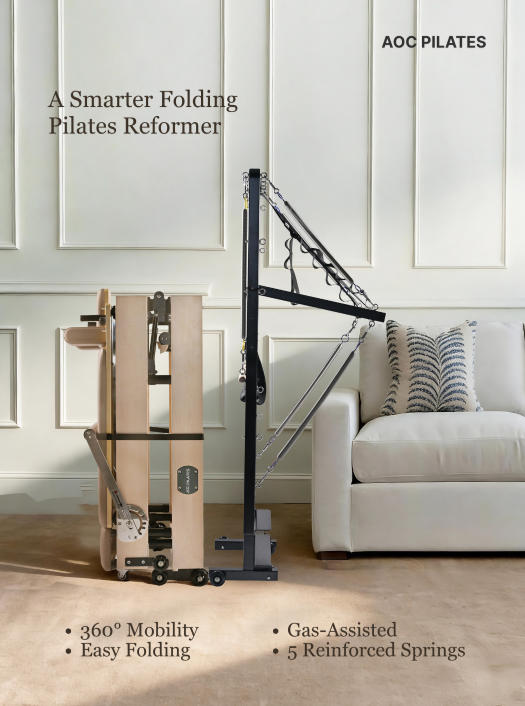
This matters more now that removable Tower systems are common. A Tower may be taken off for storage, transportation or room reconfiguration rather than remaining permanently fixed to the Reformer.
The advantage becomes particularly relevant with foldable home Reformers. Some systems allow the Reformer to be folded and stored vertically while the Tower is removed separately. In that situation, a lighter Tower can make regular setup and storage easier.
However, removable does not automatically mean aluminum is the better option. FOLD, for example, uses a 20 kg lightweight stainless steel Tower with built-in wheels for its foldable home Reformer system.
That is a useful reminder: weight can be addressed through material choice, but also through frame design, wheels and easier mounting.
4. Pilates Reformer with Tower: Price and Value
An aluminum Tower can cost more even when stainless steel provides greater material rigidity.
The difference often comes from manufacturing. Aluminum works well with extruded profiles, machining and anodized surface treatments. Some aluminum Towers also use more connectors or additional reinforcement, increasing production complexity.
This means a higher price may reflect lighter construction, machining, finishing and design, rather than greater stability.
For a buyer comparing two versions of the same Pilates Reformer with Tower, the useful question is what the extra cost actually delivers. If the aluminum version mainly reduces weight and changes the appearance, those benefits need to matter enough to justify the premium.
When the stainless steel Tower is both more rigid and less expensive, it usually offers the stronger value proposition for regular training.
5. Half Towers, Simple Towers and Foldable Reformers
Tower format also affects how much weight each factor should carry in the buying decision.
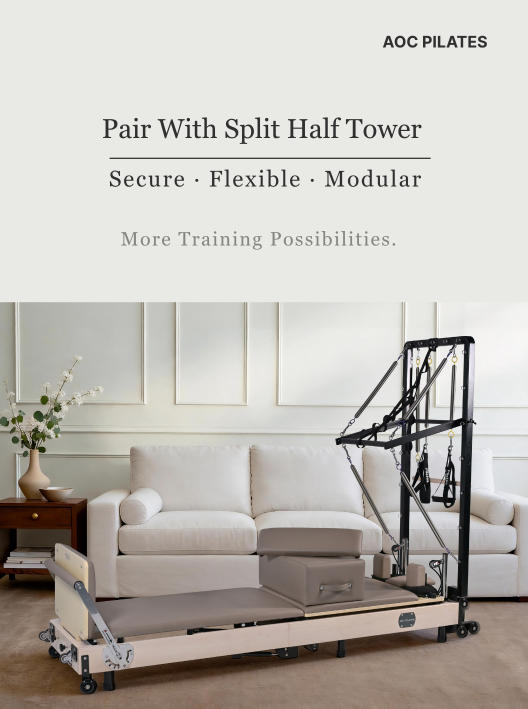
A Pilates Half Tower mounted to a conventional Reformer is expected to support a broad range of spring exercises and is often left installed for long periods. In that setting, rigidity has high practical value. Align-Pilates, for example, uses a full stainless steel upper frame on its Half Cadillac while making the Push-Through Bar from aluminum.
A simple home Tower may use less framing and fewer attachment points. Here, the material name alone is less informative. A stainless steel frame will not compensate for a weak mounting system or an overly simplified connection to the Reformer.
A foldable Reformer with a removable Tower shifts more attention toward handling. If the Tower is removed every time the machine is folded and stored upright, lower weight becomes a much more meaningful benefit.
So the material comparison is most useful when the Tower structures themselves are broadly comparable.
6. Professional Pilates Tower Materials and Brand Examples
Professional brands show that stainless steel is not simply a budget alternative to aluminum.
Balanced Body's Studio Reformer with Tower uses a handcrafted stainless steel Tower, while its three-sided Push-Through Bar slide system is made from anodized aluminum. Its Clinical Reformer with Tower follows the same material approach.
Align-Pilates also combines a full stainless steel Tower frame with an aluminum Push-Through Bar on its Half Cadillac.
At the same time, professional aluminum Towers clearly exist. Peak Pilates specifies an anodized aluminum frame for its MVe Tower, while BASI Systems uses aircraft-grade aluminum and integrates adjustable spring-positioning features into its frame system.
These products make the distinction clear: aluminum can perform very well when the complete system is engineered around the material. But aluminum itself should not be treated as an automatic performance upgrade.
7. Stainless Steel or Aluminum Pilates Tower: Which Should You Buy?
For most buyers choosing a conventional Pilates Reformer with Half Tower, stainless steel is the more practical option. It offers high rigidity, a solid feel during spring exercises and often better value, especially when the stainless steel model is priced below the aluminum version.
Aluminum deserves more consideration when the Tower will be handled regularly. If you frequently remove it for vertical storage, move equipment between rooms or use a foldable Reformer at home, the lower weight can make a noticeable difference.
For simple Tower designs, pay close attention to how the frame attaches to the Reformer rather than choosing solely by material.
For the majority of studio and home users, the decision is straightforward: choose stainless steel for stability and value; choose aluminum when lower weight and easier handling provide a benefit you will use regularly.


Trending Now
-

Types of Pilates Reformers: How Material, Frame Structure, and Environment Define Function
2026-09-10 10:29:31 -

What to Look for When buying a Pilates reformer?(It’s Not Just the Wood& Leather)
2026-09-04 14:22:24 -

How Much Does It Cost to Open a Pilates Studio in 2026?
2026-08-20 10:42:13 -

How to Choose a Commercial Pilates Reformer for Studio Use?
2026-06-08 14:07:56