
Pilates Reformer Platform Extender: What It Is and Why Studios Need One
A Pilates Reformer Platform Extender is designed to enlarge the fixed support area of a Reformer. Its value is not simply the extra surface itself, but the way that additional space improves stability, positioning, and exercise adaptability.
For professional Pilates studios, this can make a noticeable difference in standing, kneeling, plank, and supported exercises. It also gives instructors more control over how exercises are progressed for different client levels without changing the Reformer’s basic spring and carriage system.
1. What Is a Pilates Reformer Platform Extender?
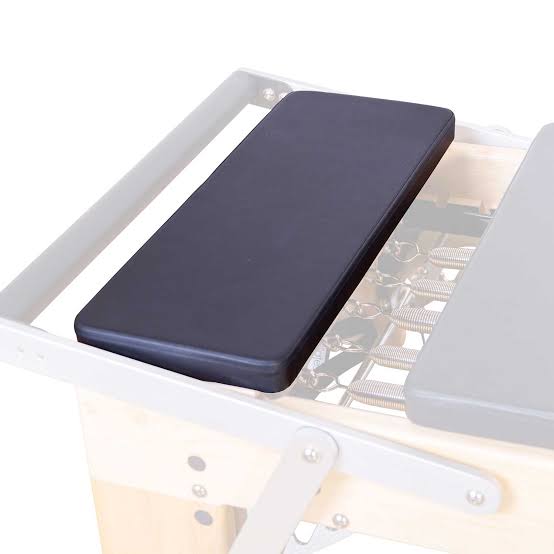
A Pilates Reformer Platform Extender is an accessory that increases the usable area of the Reformer’s fixed platform. It creates more room for the feet, knees, hands, or forearms while the carriage and spring system continue to function normally.
The distinction becomes clearer when you look at the standing platform and carriage:the platform stays fixed while the carriage moves.
A Platform Extender does not make the Reformer longer, add resistance, or create a separate exercise system. It changes the amount of stable surface available around the moving carriage.
A standard standing platform can support many exercises, but its size may limit foot placement or kneeling positions. By increasing this fixed area, the Platform Extender gives clients more space to establish a stable starting position before movement begins.
Its basic function can be summarized simply: more support area creates more positioning options.
2. How a Platform Extender Changes the Reformer Setup
The main difference between a standard Reformer platform and an extended platform is the amount of stable surface available to the body.
Feature | Standard Reformer Platform | Platform Extender |
Support area | Smaller fixed surface | Expanded fixed surface |
Foot placement | More limited | More flexible |
Kneeling positions | Less space | Greater support |
Hand and forearm support | More restricted | More placement options |
Standing exercises | Standard setup | Greater stability |
Exercise modification | More limited | More adaptable |
This changes the training environment without changing the mechanics of the Reformer.
A client performing a lunge, for example, still has to control the moving carriage, spring resistance, pelvis, and lower body. The difference is that the fixed foot has a larger and more secure surface.
That allows the exercise to focus more clearly on movement quality rather than limited platform space.
3. How a Platform Extender Improves Pilates Reformer Exercises
The greatest benefit appears in exercises where one part of the body needs a stable base while another part interacts with the moving carriage.
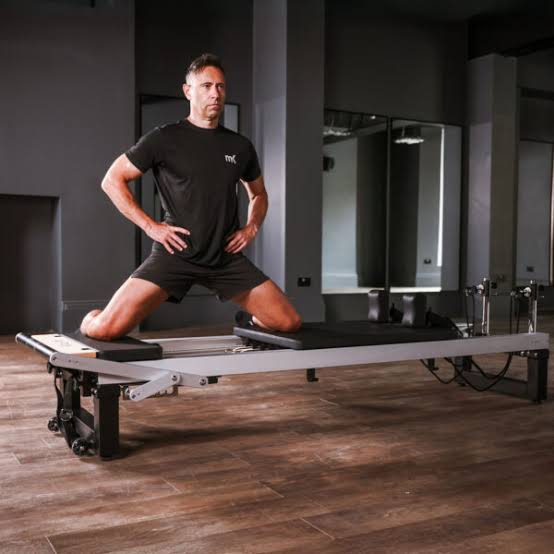
Standing exercises are a good example. In lunges, front splits, squat variations, and other standing work, foot placement can influence the entire movement. A larger platform gives the client more room to position the whole foot securely, making it easier to focus on hip alignment, pelvic control, lower-body strength, and carriage movement.
The same principle applies to kneeling work. When the available platform is narrow, the knee or shin may have only limited support. An extender provides a broader contact area, which can make kneeling positions more comfortable and better organized.
Upper-body support can also benefit. In plank, quadruped, or forearm-supported variations, the hands, elbows, and forearms have more placement options. This allows instructors to adjust shoulder position, body alignment, and weight distribution more precisely.
The Platform Extender therefore does not simply make exercises “easier.” It removes restrictions created by limited surface area and gives the instructor more control over exercise setup.
4. Platform Extender and Pilates Exercise Progression
A larger support surface can be useful at both beginner and advanced levels.
For beginners, the benefit is often greater stability. A client who is still learning to manage the carriage does not necessarily need the additional challenge of balancing on a very small fixed platform at the same time.
Reducing that unnecessary instability allows the instructor to focus on the main training objective, such as hip control, trunk stability, or lower-body alignment.
For more experienced clients, the same larger surface can support more complex programming. Once stability is established, the instructor can increase spring resistance, range of motion, unilateral loading, rotation, or movement complexity.
This makes the Platform Extender useful as a progression tool rather than simply an assistance device.
Its real value lies in allowing the instructor to decide where the challenge should come from.
5. Platform Extender vs Mat Converter: What Is the Difference?
Platform Extenders and Mat Converters are both Pilates Reformer accessories, but they have very different purposes.
A Platform Extender enlarges the fixed support area while keeping the Reformer in normal working mode. The carriage still moves, the springs still provide resistance, and the exercise remains based around Reformer mechanics.
A Mat Converter changes the training surface more substantially,especially when used with a Reformer with Tower.It creates a stable, flat area that allows the Reformer station to be used for elevated Matwork and, on compatible systems, broader Tower or apparatus-based programming.
Feature | Platform Extender | Mat Converter |
Main function | Expands support area | Converts training surface |
Main focus | Stability and positioning | Elevated Matwork |
Carriage-based work | Remains central | Less central after conversion |
Best use | Standing, kneeling, supported work | Mat-style and conversion work |
Training change | More usable support | Different training surface |
The simplest distinction is that a Platform Extender adds more space to work on, while a Mat Converter changes the type of surface being used.
They may overlap in some supported or mat-style exercises, but they are not substitutes for one another.
6. Benefits of a Platform Extender for Pilates Studios
For a commercial Pilates studio, the Platform Extender increases the range of clients and exercises that can be accommodated on the same Reformer.
A beginner may benefit from a more stable standing or kneeling setup, while an experienced client may use the same surface for more demanding unilateral or weight-bearing work. This gives instructors more freedom to adapt one exercise concept across different levels.
The larger surface can also be useful for older adults or clients who need more support during transitions and weight-bearing positions. In these cases, additional stability helps the instructor control exercise difficulty more precisely.
For studios with several instructors, that flexibility becomes even more useful. One teacher may use the extender mainly for standing work, while another may use it for kneeling, plank, or supported variations.
The accessory therefore adds value not because it introduces a completely new training method, but because it makes the existing Reformer more adaptable.
7. Which Pilates Studios Benefit Most from a Platform Extender?
Group Reformer studios can benefit from standardized Platform Extenders when standing and kneeling work appear regularly in class programming. Consistent equipment across stations makes it easier for instructors to teach the same movement without adjusting exercises around differences between machines.
Private Pilates studios often benefit in a different way. The larger support area gives instructors more options for modifying exercises around an individual client’s balance, mobility, or confidence.
Clinical and rehabilitation-oriented environments may place even more value on this flexibility. A stable platform can reduce unnecessary balance demands and allow the exercise to focus on the intended movement goal.
Home users may not need a Platform Extender if they mainly perform traditional Reformer exercises. Its value increases when training includes more standing, kneeling, supported, or advanced variations.
8. What to Consider When Choosing a Reformer Platform Extender
Compatibility should be the first consideration because Platform Extenders are usually designed around specific Reformer dimensions and platform structures.
The usable surface area also matters. An extender should provide enough additional space to make a meaningful difference in foot, knee, hand, or forearm placement.
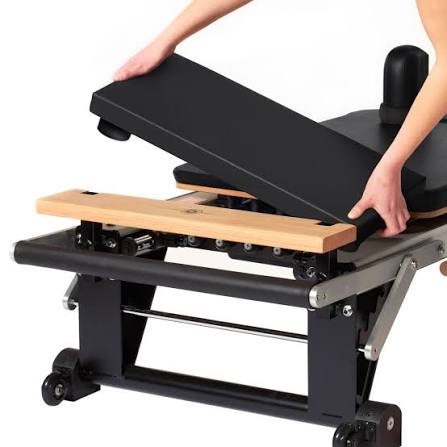
Height alignment is another important detail. Some padded Platform Extenders are designed to sit close to carriage height, creating a smoother relationship between the fixed and moving surfaces. This can expand the range of supported exercise options.
For commercial studios, construction quality is equally important. The extender should remain stable during repeated daily use, and its surface should be durable, easy to clean, and comfortable enough for kneeling or forearm support.
9. Why Platform Extender Is a Valuable Pilates Reformer Accessory
A Platform Extender does not change the fundamental mechanics of the Reformer. Its purpose is to improve how the body is supported while those mechanics remain in use.
By increasing the fixed support area, it allows more secure foot placement, better kneeling support, more upper-body positioning options, and more controlled exercise progression.
This gives it a distinct role among Pilates Reformer accessories. A Jump Board changes the type of movement. A Pilates Reformer Box changes body position by providing elevated support for seated or prone exercises. A Mat Converter changes the training surface. A Platform Extender changes support, stability, and usable working space.
For professional Pilates studios, that added support can make one Reformer easier to adapt across more clients, more exercises, and more teaching styles.
More support creates more control, and more control creates more programming options.


Trending Now
-

Manual vs Retractable Pilates Reformer Ropes: Which Is Better for a Studio?
2026-09-07 08:58:16 -

Walnut Pilates Reformers: What Studios Should Look For
2026-07-30 13:36:59 -

How to Choose a Commercial Pilates Reformer for Studio Use?
2026-06-08 14:07:56 -

How to Turn a Small Pilates Studio Into a Multi-Revenue Space
2026-05-29 15:19:19 -

Why Vertical Storage Pilates Reformers Are Popular in European Studios?
2026-05-09 09:40:04