
Mat Converter vs Pilates Mat: What’s the Difference for Pilates Studios?
A Pilates Mat and a Mat Converter can both support Matwork, but they serve different purposes in a studio.
A Pilates Mat is a standalone training surface designed for floor-based Mat Pilates. A Mat Converter is a Reformer accessory that turns the Reformer into a stable, elevated Matwork platform.
The exercises performed on both surfaces may overlap, but the training environment, instructor access, equipment integration, and use of studio space are different. For studios already using Reformers, a Mat Converter can extend the function of each station beyond traditional carriage-based exercises.
1. Mat Converter vs Pilates Mat: The Basic Difference
The simplest distinction is that a Pilates Mat is a training surface, while a Mat Converter is part of the Reformer system.
A Pilates Mat is placed directly on the floor and can be used independently. It supports traditional Mat Pilates exercises without springs, ropes, or moving equipment.
A Mat Converter is fitted into or over the Reformer to create a flat, padded surface at Reformer height. Once installed, the moving carriage area becomes a stable platform suitable for Matwork and other supported exercises.
Pilates Mat | Mat Converter | |
Type | Standalone Pilates equipment | Reformer accessory |
Training height | Floor level | Reformer height |
Requires a Reformer | No | Yes |
Main use | Floor-based Mat Pilates | Elevated Matwork |
Uses springs when used alone | No | No |
Integrates with Reformer | No | Yes |
Can integrate with Tower | No | Yes, on compatible systems |
The important point is that a Mat Converter does not replace Mat Pilates as a training method. It changes where and how Matwork can be performed.
2. Mat Pilates Exercises vs Mat Converter Exercises
A Mat Converter does not create a separate Pilates exercise repertoire.
Exercises such as the Hundred, Roll Up, Single Leg Stretch, Double Leg Stretch, Side Kick, Teaser, and Swimming can be performed on a traditional Pilates Mat or on a stable Mat Converter surface.
The main training principles remain the same. Both can emphasize core control, spinal articulation, breathing, pelvic stability, coordination, and movement precision.
The training environment changes, but Mat Pilates remains primarily bodyweight-based, whether practiced on the floor or on a Mat Converter.
On a floor Mat, the body works directly against gravity on an open, low surface. On a Mat Converter, the same movement takes place on a narrower, elevated platform integrated into the Reformer frame.
This affects how the exercise is taught and how much surrounding space is available, but it does not automatically turn a Mat exercise into a Reformer exercise.
A useful distinction is:
Pilates Mat = floor-based Matwork
Mat Converter = elevated Matwork on the Reformer
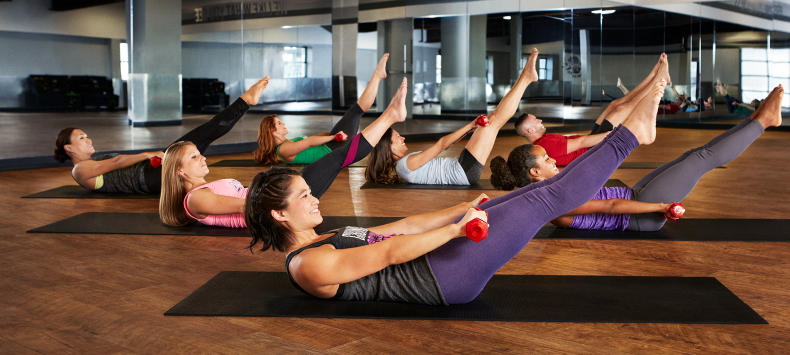
3. Floor Mat Pilates vs Elevated Matwork: How the Exercise Experience Changes
Floor Mat Pilates gives the body a wide and unrestricted training area. This is particularly useful for exercises that involve rolling, broad arm movements, or larger side-to-side movement patterns.
Exercises such as Rolling Like a Ball, Open Leg Rocker, Seal, and some Side Kick variations generally feel more natural on the floor because there is no platform edge to manage.
A Mat Converter creates a more defined working area. The Reformer frame gives the body clearer spatial boundaries, and the elevated surface changes the relationship between the client, instructor, and equipment.
That elevation can also create movement space below the platform level. In selected prone, side-lying, or supported exercises, the arms or legs may be able to move beyond the edge of the platform in ways that are not possible when the body is directly on the floor.
The two surfaces therefore emphasize different qualities.
Floor Mat Pilates offers more freedom around the body and remains the most natural environment for traditional Mat repertoire.
Elevated Matwork offers a more contained training surface with closer integration into the rest of the apparatus.
4. Benefits of a Mat Converter for Pilates Studios
The strongest advantages of a Mat Converter are not based on performing “better” Mat exercises. They come from accessibility, teaching efficiency, equipment integration, and use of studio space.
One practical benefit is height. Clients do not need to move all the way down to floor level before beginning Matwork. This can make transitions easier for clients who find repeated floor transfers less convenient.
Instructor access is also different. When a client is lying on a floor Mat, the instructor often needs to kneel, squat, or bend down for close observation and hands-on cueing. An elevated Matwork surface places the client closer to standing height, making it easier for the instructor to work from the side, head, or foot end.
For private and semi-private sessions, this can make teaching more efficient.
A Mat Converter also allows one station to move between Reformer work and Matwork without changing areas.
Instead of using a Reformer for one part of the session and then moving to a separate Mat station, the same footprint can support both types of work.
For studios with limited floor space, this is one of the most practical reasons to use a Mat Converter.
5. Mat Converter and Reformer Integration: More Than a Raised Pilates Mat
A Mat Converter becomes more useful when it is treated as part of the wider Reformer system rather than as a substitute for a floor Mat.
Even without springs, the Reformer structure can provide additional support points. Depending on the machine design, the Footbar or frame can be incorporated into supported positions, plank variations, or transitional exercises.
This creates exercise options that are difficult to reproduce with a Pilates Mat alone.
The difference becomes more significant when the Reformer includes a Vertical Frame or Tower.
A Mat Converter provides the stable padded surface, while the Tower can add springs, bars, and attachment points. This creates access to exercises using a Roll-Down Bar, Push-Thru Bar, arm springs, leg springs, and other spring-assisted or spring-resisted movements.
A Reformer with Tower can therefore support more than Matwork.
The progression is easier to understand as three separate training environments:
Pilates Mat → traditional floor-based Matwork
Reformer + Mat Converter → elevated Matwork and Reformer-integrated exercises
Reformer + Mat Converter + Tower → Matwork plus Tower/Cadillac-style spring programming
This broader apparatus integration is one of the main differences between a Mat Converter and a standard Pilates Mat.
6. Pilates Mat vs Mat Converter for Different Studio Uses
The better choice depends on how a Pilates studio uses its space and the classes it offers.They support different studio formats.
Studio Use | Pilates Mat | Mat Converter |
Traditional Mat Pilates classes | Excellent | Usually unnecessary |
Large group Mat classes | More practical | Less practical |
Rolling exercises | More natural | More restricted |
Private Pilates sessions | Good | Very practical |
Floor transfer convenience | Requires floor access | Elevated surface |
Instructor access | Lower working position | Easier standing access |
Reformer-to-Mat transitions | Requires separate station | Same station |
Space efficiency | Requires Mat area | Uses Reformer footprint |
Tower/Cadillac integration | No | Possible on compatible equipment |
For a dedicated Mat Pilates studio, traditional Mats remain the obvious choice. They are simple, flexible, and well suited to group classes.
For a Reformer-based studio, the priorities are different. The ability to convert an existing Reformer station into a Matwork platform can increase the usefulness of the same equipment without adding another large training area.
The distinction can be summarized simply:
Floor Mat prioritizes pure Matwork.
A Mat Converter prioritizes accessibility, teaching efficiency, space efficiency, and integration with the Reformer system.
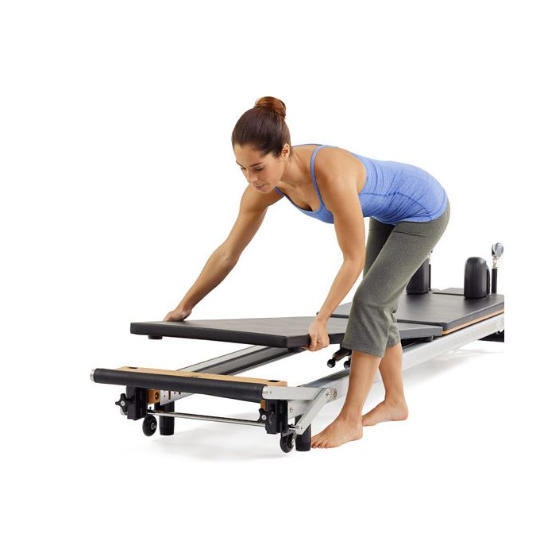
7. When a Mat Converter Makes Sense as a Pilates Reformer Accessory
A Mat Converter is most useful when Matwork needs to be integrated into a Reformer-focused studio rather than treated as a completely separate class format.
It can be particularly useful in studios offering private or semi-private sessions, studios with limited floor space, and facilities where instructors frequently move between Reformer and Mat-based exercises within the same session.
It also has more value when the Reformer is part of a larger apparatus system. A studio using a Tower or Vertical Frame can extend the function of the Mat Converter beyond elevated Matwork and into spring-based programming.
A standard Pilates Mat remains more practical for studios that mainly run group Mat classes, have sufficient open floor space, or focus heavily on traditional floor-based repertoire.
For that reason, Mat Converters and Pilates Mats should not be viewed as direct substitutes. They solve different programming and space-planning needs.
8. Mat Converter or Pilates Mat: The Practical Difference for a Studio
A Pilates Mat provides the simplest and most natural surface for traditional Mat Pilates. It offers open movement space, works well for large group classes, and does not depend on any other equipment.
A Mat Converter serves a different purpose. It turns the Reformer into an elevated Matwork station and allows the same equipment footprint to support more than carriage-based Reformer exercises.
Its main value comes from easier instructor access, simpler Reformer-to-Mat transitions, better use of studio space, and the ability to integrate with Footbars, Towers, and other apparatus components.
The Mat repertoire itself may remain largely the same, but the way it fits into the studio changes.
Pilates Mat is designed for dedicated floor-based Matwork. A Mat Converter is designed to make the Reformer station more versatile.


Trending Now
-
How Can One Pilates Reformer Create More Revenue?
2026-10-26 09:32:31 -

How Much Does It Cost to Open a Pilates Studio in 2026?
2026-08-20 10:42:13 -

How to Choose a Commercial Pilates Reformer for Studio Use?
2026-06-08 14:07:56 -

How to Turn a Small Pilates Studio Into a Multi-Revenue Space
2026-05-29 15:19:19