
Brazil Aluminum Reformer Market: Local & Imported
Brazil Makes Its Own Pilates Equipment—So Why Are Aluminum Reformers Still Being Imported?
At first glance, imported aluminum Reformers seem difficult to explain in Brazil.
The country already has experienced Pilates equipment manufacturers. It has domestic steel, wood and aluminum industries. Local factories know how to weld, machine, powder coat, upholster and assemble equipment. Equipilates even offers an entire premium Classical line built in aluminum.
So why are some Brazilian brands and equipment companies still bringing imported aluminum Reformers into their product mix?
Because an imported aluminum Reformer is not necessarily competing with Brazilian manufacturing in the way an imported wooden or conventional steel machine does.
In many cases, it is filling a different product and supply-chain role.
1. Brazil Does Not Import Aluminum Reformers Because It Cannot Build Them
The first misconception is that aluminum equipment must be imported because Brazil lacks the ability to produce it.
That is clearly not true.
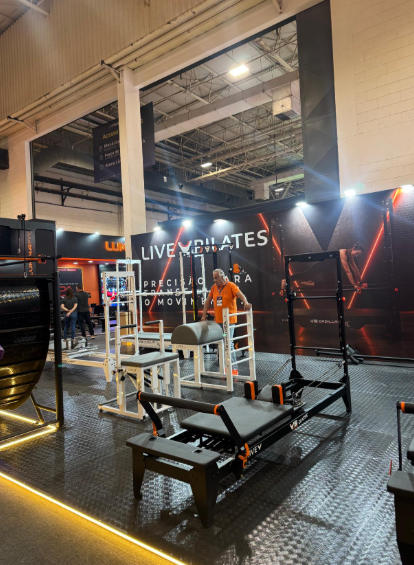
Equipilates currently markets an all-aluminum 86-inch Classical Reformer, Reformer Tower, Cadillac and other aluminum apparatus, and presents the range as part of its own manufacturing operation in Resende.
Brazil also has a significant aluminum industry upstream.
The capability exists.
The more useful question is therefore not whether Brazil can produce an aluminum Reformer. It is whether every company that wants an aluminum Reformer should develop the entire product locally.
Those are very different questions.
For a manufacturer that already has an established aluminum platform, tooling and supplier network, domestic production can make sense.
For a brand whose core business has historically been wood, carbon steel or general fitness equipment, developing a new aluminum extrusion system may be slower and more expensive than sourcing a proven platform internationally.
2. Aluminum Reformers Depend on a Different Supplier Network
A conventional carbon-steel Pilates Reformer can be produced using industrial processes that Brazil already performs at scale.
Steel tube is cut, bent and welded. Plates are laser cut. The structure is cleaned and powder coated. Upholstery is added and the product is assembled.
An aluminum Reformer—particularly one based on custom extrusion—moves more of the engineering upstream.
The profile may need a dedicated die. Rail geometry can be integrated directly into the extrusion. Mounting channels, bolt interfaces and carriage geometry may depend on CNC finishing after extrusion. Anodizing or other surface treatment follows. The profile then needs to work with bearings, wheels, polymer parts and dedicated hardware.
China's advantage in this category is not simply that it produces a great deal of aluminum.
It is that the companies performing extrusion, die making, machining, anodizing, bearing supply, plastic molding and small hardware production often exist within the same industrial ecosystem.
This reduces the cost and time required to turn a new Reformer concept into a repeatable commercial platform.
Current Chinese OEM products illustrate how developed this supply base has become. Commercial aluminum Reformers can already be configured with alternative rail materials, German or Korean springs, different Footbar mechanisms, upholstery colors and private-label branding without the buyer having to develop each component independently.
For a Brazilian company, importing that platform can sometimes be faster than recreating the platform.
3. Imported Aluminum Reformers Can Fill a Gap Instead of Replacing a Local Line
This is the most important point.
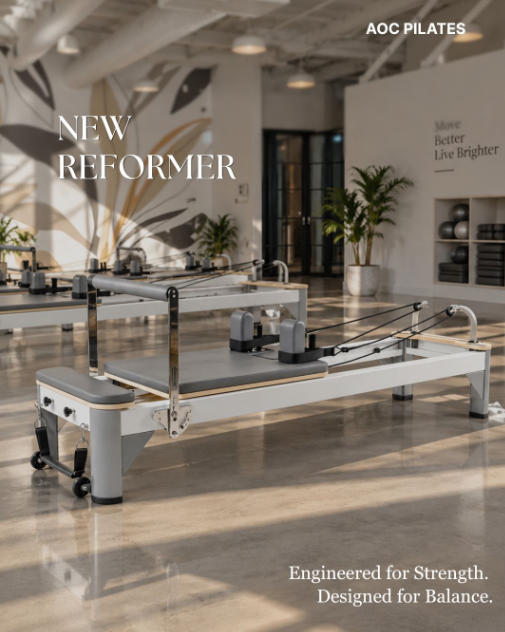
During our Brazilian market research, we found that some local companies were using imported aluminum Reformers to complement their existing range rather than replace their locally made equipment.
That strategy makes commercial sense.
A company may already sell eucalyptus or carbon-steel apparatus successfully. Those products have their own customers and economics. Adding one contemporary aluminum Reformer gives the company access to another studio aesthetic and another buyer without requiring a complete new production program.
This is common in the wider fitness industry.
A brand does not need to manufacture every treadmill motor, console, bearing or cable system in the same factory simply to maintain control of its market position. It chooses which capabilities are strategic and which are more efficient to source.
Brazilian fitness company Athletic Vision is an interesting example of this global sourcing mentality. The company is headquartered in Joinville, Brazil, operates a Pilates line and also lists locations in Nantong, Xiamen and Guangzhou in China. That does not prove that every specific Pilates model is produced in China, but it illustrates how a Brazilian equipment business can operate with a genuinely international product-development and sourcing footprint.
The important change is that imported Pilates equipment is no longer limited to a foreign brand entering Brazil.
It can also sit inside the portfolio of a Brazilian company.
4. Brazil's Import Taxes Make This More Selective, Not Impossible
If importing into Brazil carries significant tax and logistics costs, why would a local company import a complete aluminum Reformer at all?
Because tariff pressure does not affect every product in the same way.
A large conventional product that closely resembles an inexpensive locally made machine has a difficult equation. Once import taxes, freight and local distribution are added, there may be little reason to import it.
A differentiated product can have different economics.
If an imported aluminum Reformer gives the distributor a product it does not currently have—a lighter contemporary design, a distinctive extrusion system, a different price point, a Group Reformer format or a private-label model—the company is no longer comparing two identical machines.
It is paying an import premium to add a new category.
That does not remove Brazil's import-tax burden. The importer still needs to classify the product correctly by NCM and model the federal taxes and state ICMS before setting a retail price. Brazil's official import simulator exists precisely because those costs vary with the product classification and transaction.
But taxation determines which imported products are worth importing; it does not automatically make every imported product commercially impossible.
That distinction is crucial.
5. The Growth of Group Reformer Is Creating a New Product Requirement
The aluminum question also overlaps with changes in how Reformers are being used.
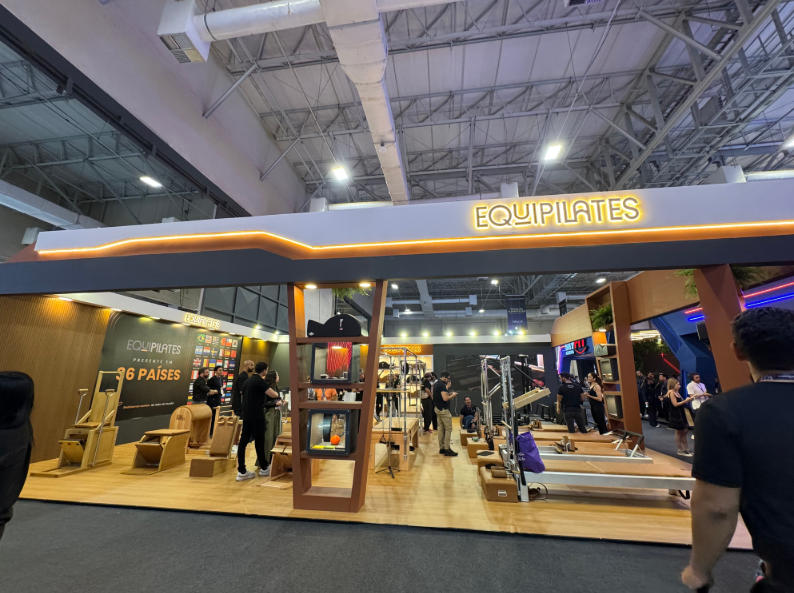
Traditional Brazilian Pilates has been strongly associated with studios and clinical environments using a mixed apparatus set. The typical room might contain a Reformer, Cadillac, Chair and Barrel rather than a large number of identical machines.
Group Reformer changes that purchasing pattern.
Once a studio needs eight, ten or twelve similar Reformers, consistency, footprint, movement, storage and adjustment speed become much more important.
Brazilian manufacturers have already responded.
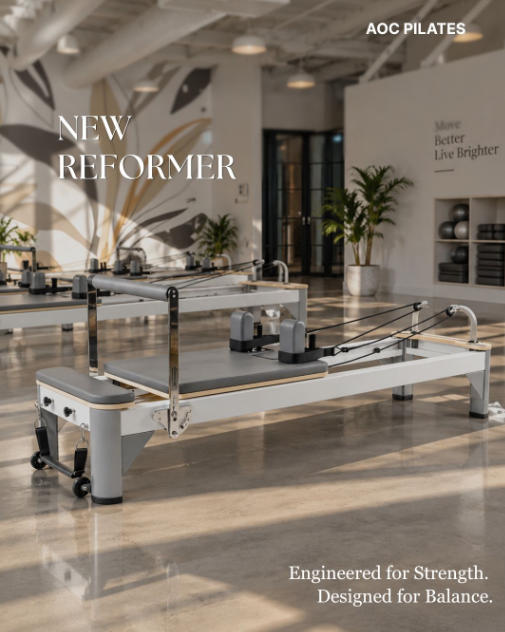
MetaLife's Advanced Reformer is positioned toward group and higher-flow Pilates use and incorporates both carbon steel and aluminum. The fact that a major local manufacturer has developed a product specifically around this application is evidence that the category is moving beyond the traditional mixed-equipment studio.
An imported full-aluminum Reformer can therefore enter Brazil not as a substitute for a traditional local Cadillac or wood Reformer, but as a response to a newer studio format.
That is a very different business case.
6. Imported Aluminum Equipment Also Reduces the Cost of Testing a New Segment
Developing equipment locally involves more than raw material.
A company needs engineering time, prototypes, tooling, suppliers, fixtures, manuals, spare-parts planning and quality-control procedures.
If the company is unsure how large the market will be, that investment may be difficult to justify.
Importing an existing aluminum platform provides another option.
A Brazilian brand can begin with a relatively small commercial batch, learn what studios actually value, then decide whether to continue importing, modify the OEM model or localize part of the product later.
This is particularly attractive for a company entering Group Reformer or boutique-studio equipment for the first time.
The importer does not need to predict five years of demand before selling the first machine.
It can test the category with a mature platform.
That is one reason OEM/ODM becomes more important than simple catalog exporting.
The Brazilian company may want its own color, upholstery, logo, spring configuration or adjustment system without wanting to engineer the entire chassis from zero.
For the overseas manufacturer, flexibility becomes the product.
7. Chinese Aluminum Reformers Compete on Industrial Integration, Not Just Price
It would be a mistake to position Chinese aluminum Reformers in Brazil only as "cheaper machines."
Brazilian manufacturers already know how to build good equipment at competitive prices.
The stronger Chinese advantage is industrial integration.
A Pilates equipment factory working within a mature Chinese aluminum supply chain can coordinate profile design, extrusion, CNC machining, surface finishing, rollers, bearings, fasteners, polymer parts, springs, upholstery and packaging within a highly developed manufacturing network.
That shortens the distance between design change and production.
A Brazilian distributor that wants a different Footbar mechanism, modified platform length or unique profile finish may be able to make that change without developing an entirely new domestic supplier ecosystem.
This is particularly valuable in private label.
A distributor is not buying only an existing Reformer. It is buying access to an established manufacturing platform that can be modified into its own product.
That is a stronger position than competing solely on FOB price.
8. The Brazilian Opportunity Is Product-Line Complementation
The most realistic opportunity for imported aluminum Reformers is therefore not to displace everything Brazil already manufactures.
Brazilian factories remain well positioned in eucalyptus apparatus, traditional mixed-equipment studios, carbon-steel equipment, local assembly and after-sales service.
Aluminum imports make more sense where they broaden that offer.
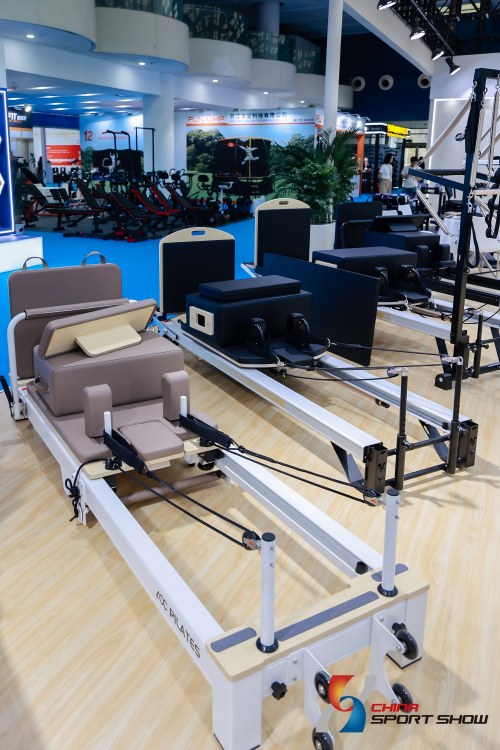
A manufacturer may keep its locally made Classic equipment while adding an imported contemporary aluminum Reformer.
A fitness-equipment distributor may add Pilates without first building a new production line.
A Studio chain may specify a customized Group Reformer from an OEM supplier.
A local brand may start with imported machines, learn the market and later localize selected components.
These are all very different from the old model in which a foreign factory simply sends a generic machine into Brazil and competes with local manufacturers on price.
The better opportunity is to supply a product that gives the Brazilian customer something missing from the current portfolio.
That may be an aluminum Reformer today.
Tomorrow it could be a different motion system, adjustment mechanism or Group Pilates platform.
Brazil's manufacturing strength does not eliminate the opportunity for imports.
It makes the imported product prove why it deserves to be there.


Trending Now
-

Wood vs Aluminum: Which Pilates Reformer Is Right for Your Studio
2026-09-10 10:20:07 -
Why Do Indian Pilates Studio Chains Prefer Purchasing Aluminum Reformers?
2026-09-10 10:05:15 -

Custom Aluminum Folding Pilates Reformer with a Removable Carriage
2026-09-10 10:00:55 -

The Value of Removable Legs in Modern Aluminum Pilates Reformers
2026-09-10 09:58:46 -

Why Aluminum Pilates Reformers Are More Popular in Commercial Pilates Studios
2026-09-10 09:56:09 -

How to Choose Pilates Reformer Tracks: Aluminum vs Stainless Steel
2026-09-04 14:14:55