
Elegant Wood Grain Aluminum Pilates Reformers for Modern Studios
The reformer shown here has an aluminum frame with a brown wood-grain finish. Our factory uses UV heat transfer to create the decorative pattern on the frame surface. Paired with black upholstery, the finish gives the aluminum reformer a timber-style appearance that can coordinate with a Pilates studio interior.
This example brings together two separate choices: aluminum frame construction and wood-grain surface decoration. Comparing the original white-and-cream version with the finished brown-and-black model shows how the appearance changes across the beams, legs and carriage.
1. Reformer Pilates Growth and Studio Design
ClassPass’s 2025 Look Back Report recorded a 71% year-over-year increase in Reformer Pilates bookings on its platform. Pilates was also its most-booked workout for the third consecutive year. The report covered reservation data from January 1 to October 10, 2025.
For studios adding reformer classes, equipment occupies a substantial part of the available floor area. Its color is repeated throughout the room and reflected in mirrors. Choosing a frame finish therefore affects the interior as well as the individual machine.
In a boutique Pilates studio, equipment can carry the colors used at reception into the training area. A wood-grain finish gives an aluminum Pilates reformer a place within an interior that already includes timber furniture and neutral walls.
2. UV Heat Transfer on an Aluminum Pilates Reformer
On this model, UV heat transfer reproduces a selected wood-grain design on the aluminum frame. The aluminum forms the frame structure, while the transferred grain provides the brown decorative appearance. The finished machine remains an aluminum Pilates reformer.
The basic heat-transfer principle is to reproduce a printed pattern on a prepared surface through controlled heating. Established decoration systems apply wood-grain designs to coated aluminum using printed transfer carriers. Coating and transfer materials vary between processes.
For a studio owner, the useful result is the finished appearance. From a manufacturing perspective, that appearance depends on the grain design, background color, direction and surface sheen working together. The same brown pattern can look quite different when its scale or orientation changes.
3. Wood Grain Aluminum Reformer Before and After
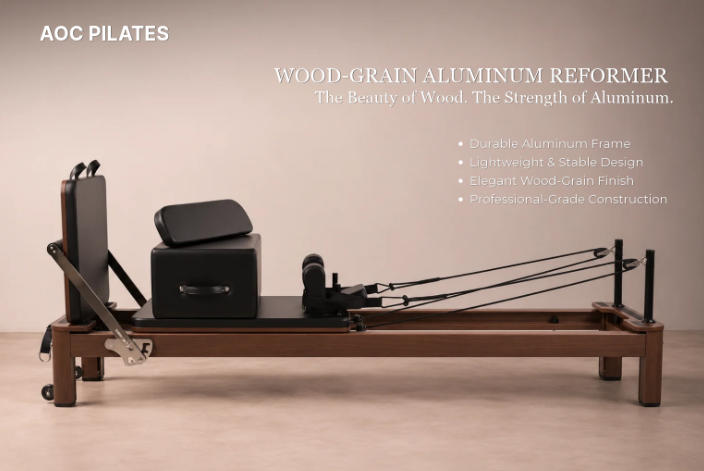
In the original version, the white aluminum frame and cream pads create a light color scheme. In the finished version, the brown wood-grain frame and black upholstery separate the machine more clearly from the pale background.
The wood grain runs along the side beams and vertically down the rounded legs. In the side view, this creates a long brown line beneath the black carriage. From the front, the rounded legs and curved platform edges show how the color continues around the end of the reformer.
The black shoulder rests and footbar covering repeat the carriage color, while the exposed metal fittings provide smaller highlights. The change in appearance comes from this complete combination of frame finish, upholstery and hardware. It cannot be attributed to the wood-grain treatment alone.
Aluminum reformer with a brown wood-grain finish and black upholstery shown from the side.
4. Matching Wood Grain to Pilates Studio Interiors
With cream walls and light flooring, the wood-grain aluminum frame introduces a timber tone into the training area. Black upholstery can connect with black mirror surrounds, light fittings or door hardware. The room can remain visually simple while the reformers provide contrast.
With gray flooring or concrete-look surfaces, brown frames can relate to a timber reception desk, bench or storage cabinet. Using related wood tones across these areas helps the equipment sit within the interior scheme.
A brown floor requires closer comparison. Two wood tones do not need to match exactly, but their undertones affect how they look together. A warm, orange-toned floor may sit differently beside the frame than a cooler brown floor. Comparing the finished surface under the studio’s lighting is more useful than relying on separate product photographs.
The white-and-cream version remains a suitable design direction for a room built around pale surfaces. The choice depends on the interior the studio is creating
5. Finish Details on Aluminum Pilates Reformers
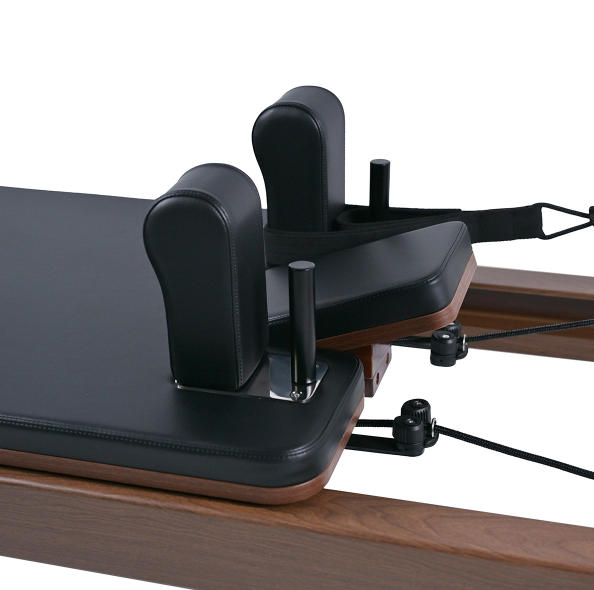
On this aluminum frame, the long side beams make grain direction and pattern repetition easy to notice. Rounded legs and platform edges reveal how the decoration follows a change in shape. These areas deserve attention when assessing a complete wood grain Pilates reformer.
Color consistency becomes more visible in group reformer studios. A small difference between two frame shades may be difficult to notice in separate photographs but clearer when the machines stand beside each other. Surface sheen also matters because studio lighting and mirrors can emphasize reflections.
These details explain why a small finish swatch cannot show the whole result. A full-machine side view reveals the grain across the beams; a front three-quarter view shows the legs, edges and relationship between the brown finish and black pads.
6. How to Clean a Wood Grain Aluminum Pilates Reformer
The wood-grain aluminum frame should be cleaned as a decorated surface. Use a soft, lint-free cloth lightly dampened with water. Where detergent is needed, choose a mild, neutral cleaner compatible with the finish, remove residue with a clean damp cloth and dry. Apply the solution to the cloth rather than spraying into joints or hardware.
Avoid abrasive pads, scouring powders, strong solvents and steam cleaning on the decorated frame. Wood oils, furniture wax and metal polish should not be applied unless specified in the care instructions. Alcohol- or bleach-based products require confirmation of compatibility with the actual coating, formulation and concentration.
Between classes, clean the carriage upholstery, headrest, shoulder rests and footbar contact surfaces with an upholstery-compatible cleaner. Avoid soaking seams, and remove residues that could leave surfaces slippery. Cleaning and disinfection are different tasks: when disinfection is required, use a product confirmed compatible with each surface and follow its label for dilution and contact time. Mild soap and water should not be presented as a disinfectant.
Keep liquid away from springs, bearings and adjustment mechanisms. Clean rails and rollers according to the model’s maintenance instructions, and do not add lubricant or polish unless specified. Check contact surfaces are dry and free of slippery residue before the next session.
7. Choosing Aluminum Pilates Reformers for a Studio
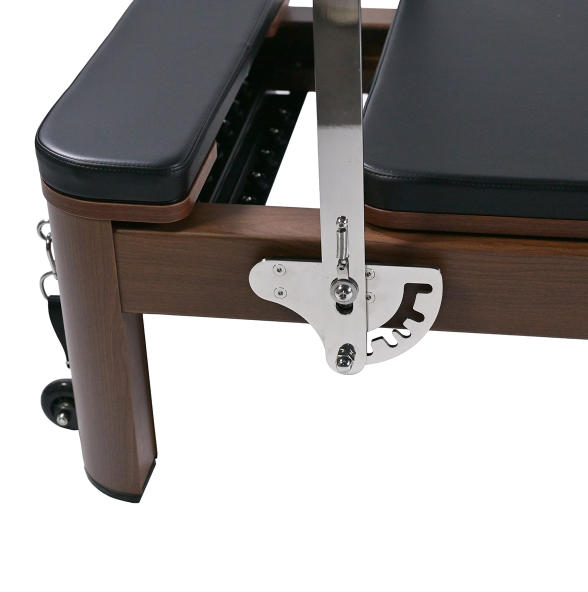
For commercial Pilates reformers, frame material, surface finish and training configuration should be described separately. Aluminum identifies this model’s frame construction. The wood-grain finish determines its decorative appearance, while the carriage, springs, adjustments and dimensions determine how the selected model fits the studio’s sessions and layout.
From a factory perspective, a finish should be assessed on the complete aluminum reformer. This example combines a brown grain pattern, black upholstery and visible metal hardware. It shows how an aluminum Pilates reformer can sit alongside timber furnishings and neutral finishes in a studio.


Trending Now
-

Chain Pilates Studio Planning: Reformer, Half Tower, and Full Tower
2026-09-21 09:26:33 -

Wood vs Aluminum: Which Pilates Reformer Is Right for Your Studio
2026-09-10 10:20:07 -

Why Aluminum Pilates Reformers Are More Popular in Commercial Pilates Studios
2026-09-10 09:56:09 -

Walnut Pilates Reformers: What Studios Should Look For
2026-07-30 13:36:59 -

How to Choose the Right Logo Method for Pilates Equipment
2026-07-13 08:54:28 -

Beyond the Logo: Building a Premium Brand Experience with White-Label Pilates Reformers
2026-06-15 10:05:13