
Why Brazil Is Different From Other Pilates Equipment Markets
Brazil is easy to misunderstand if it is viewed only as a large destination for Pilates equipment.
There is certainly strong demand. Pilates is well established across studios, physiotherapy clinics and fitness facilities, and the country has developed one of the more active Pilates communities in Latin America. But demand is only half of the story.
Brazil also has its own equipment industry.
A Brazilian studio looking for a Reformer can choose from manufacturers that build locally, sell directly, offer installment plans, provide technical assistance and maintain replacement parts inside the country. Some equipment companies have gone further, linking their machines with instructor education, studio management and proprietary training methods.
For an overseas Pilates equipment manufacturer, this makes Brazil fundamentally different from a market dominated by imports.
1. Brazil Is Both a Pilates Market and a Manufacturing Market
Brazilian Pilates equipment is not limited to small workshops producing copies of imported machines.
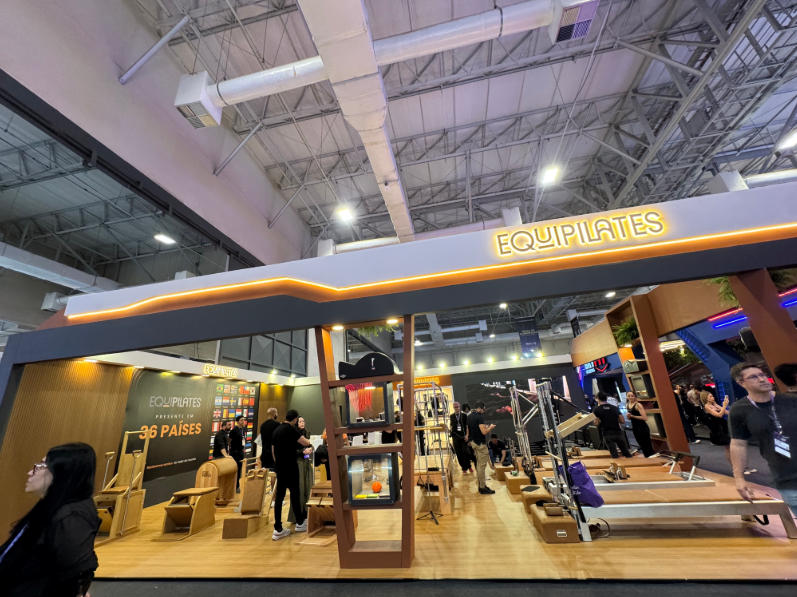
Companies such as MetaLife, Equipilates, Live, Arktus, Kauffer and Physio Pilates have developed distinct product and business models. Some focus heavily on traditional studio equipment, while others combine contemporary Pilates, rehabilitation, functional training or education.
MetaLife illustrates the depth of the local commercial structure. Its model combines direct factory sales with resellers, sales consultants and a nationwide technical-assistance network. Equipilates operates its own manufacturing base in Rio de Janeiro state and sells both contemporary and classical equipment. Live has taken another direction, positioning its equipment within a broader system of methods, education and studio strategy.
The important point is not which company is larger. It is that a foreign supplier entering Brazil is already competing with companies that understand the local customer, the local materials and the local service expectations.
That changes the role of price.
A low factory quotation from abroad is useful, but it is not enough to explain the final competitive position of an imported machine.
2. Brazil's Import Tax System Changes the Real Cost of Pilates Equipment
This is one of the most important differences between Brazil and many export markets.
Pilates equipment imported into Brazil is not evaluated only by its FOB price plus ocean freight. Import taxation is based on the product's NCM classification, and federal taxes can apply before the equipment reaches the domestic distribution network. State ICMS must also be considered.
Brazil's tax authority has, for example, formally classified a Pilates Ladder Barrel under NCM 9506.91.00, the category covering certain equipment for physical exercise. That does not mean every Reformer, Cadillac, Chair and Barrel should automatically use the same NCM. Classification needs to be checked product by product. The Brazilian government's own import simulator requires the NCM and customs value precisely because the applicable taxes and administrative treatment depend on that classification.
This makes landed-cost calculation a central part of the Brazilian market.
An overseas factory may see a strong difference between its manufacturing cost and a Brazilian retail price. The importer sees a different equation: customs value, import duty, other federal taxes, state ICMS, customs clearance, inland freight, inventory and local service.
There is also a regional trade dimension. Under Mercosur's ACE 18 framework, most qualifying intrazone trade between Brazil, Argentina, Paraguay and Uruguay is tariff-free, while goods arriving from outside the bloc do not receive that same treatment simply because they are destined for Brazil.
For a Chinese Pilates equipment manufacturer, this means the relevant comparison is never simply:
Chinese factory price versus Brazilian factory price.
It is the cost of putting a saleable, serviceable machine into a Brazilian studio.
That gap can be large enough to reshape the entire sourcing decision.
3. Local Materials Give Brazilian Manufacturers a Structural Cost Advantage
The tax structure matters even more because Brazil can already produce much of the physical equipment domestically.
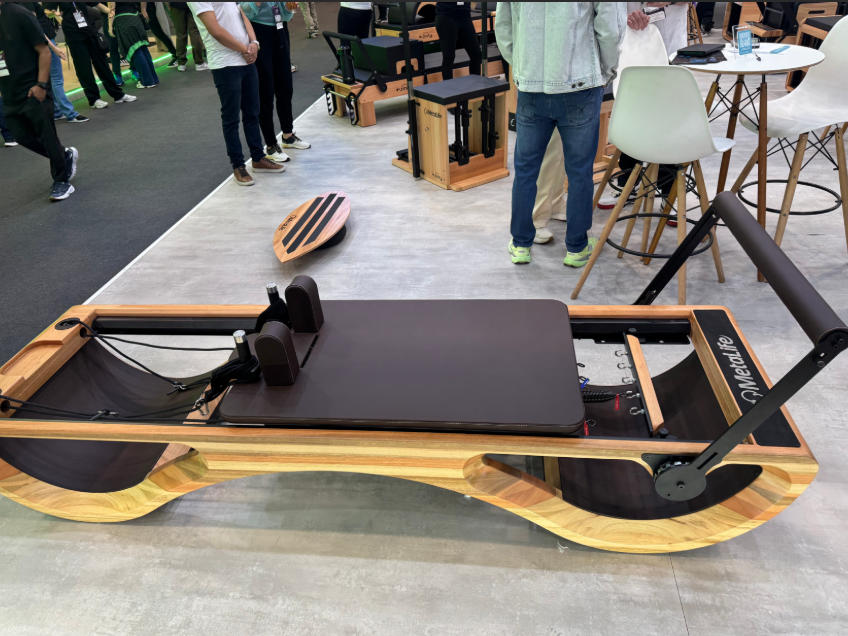
Classic Pilates equipment frequently uses local wood, particularly eucalyptus. Brazil has a mature eucalyptus and woodworking industry, so manufacturers do not need to import a bulky wooden chassis simply to produce a traditional Reformer, Cadillac or Barrel.
Carbon steel is equally important.
The metalworking processes used in contemporary Pilates equipment overlap heavily with Brazil's commercial fitness-equipment industry. Tube cutting, bending, laser processing, welding, grinding, surface preparation and powder coating are established industrial capabilities rather than rare Pilates-specific technologies.
This explains why locally produced equipment can be surprisingly competitive.
A Reformer is a long machine. Much of its shipping volume comes from the frame itself. When that frame is made from locally sourced eucalyptus or carbon steel, the Brazilian manufacturer avoids both international transport of the bulky structure and much of the import-tax exposure associated with a complete machine.
That advantage is difficult to overcome by shaving a small amount from overseas labor cost.
It also helps explain why the strongest international opportunity is unlikely to be an ordinary copy of a Brazilian wooden or steel Reformer.
4. Brazil Has Built an Equipment–Education Loop
The other major difference is less visible on a product specification sheet.
Brazil's leading Pilates companies are increasingly connecting equipment with education.
Live University describes itself directly as the educational arm of Live Equipamentos. Its courses are designed around the practical use, biomechanics and application of Live equipment in studios, clinics and gyms. A customer is therefore not only buying a machine; the instructor can also enter an education system created by the company that designed the equipment.
The Equipilates–VOLL relationship pushes this model even further.
In November 2025, VOLL and Equipilates formally announced their merger. VOLL had already developed Pilates education, classical Pilates training, postgraduate programs, professional events and studio-management content. Equipilates brought equipment manufacturing into the same broader ecosystem.
That creates a commercial loop that is particularly powerful in Pilates.
A professional learns a method or equipment system, opens or works inside a studio, purchases the equipment he or she already understands, continues receiving education and later expands or replaces equipment within the same ecosystem.
Not every Brazilian manufacturer operates a formal academy on the same scale. But the direction of the market is clear: education is increasingly connected to equipment sales.
For an overseas factory that only presents a price list and technical specification sheet, that is a significant competitive gap.
5. Service and Financing Complete the Local Advantage
Education helps create the customer. Service helps keep the customer.
Brazilian studios often expect the equipment supplier to remain involved after delivery. Installation, spare parts and technical assistance are therefore part of the commercial proposition rather than optional extras.
MetaLife's development is a clear example. The company has built a broad technical-support network and allows customers either to follow its installation manuals or use authorized technicians. Its current studio offer also extends into layout planning, equipment selection, visual customization and ongoing maintenance support.
Financing has a similar effect.
A studio owner does not necessarily choose the equipment with the lowest theoretical total price. Monthly cash flow matters. A Brazilian supplier capable of delivering locally and dividing the purchase into installments may be easier to buy from than an overseas factory requesting deposits and final payment before shipment.
This is why the local distributor remains so important even when the product itself is manufactured abroad.
Without local inventory, parts, technicians and commercial financing, a foreign manufacturer is competing with only half a business model.
6. Brazilian Pilates Manufacturers Are Also Looking Outside Brazil
Brazil should not be treated only as a protected domestic market.
Its manufacturers export.
Your original research shows MetaLife developing sales across Latin America, Europe, North America, Africa and the Middle East. Equipilates also markets equipment internationally, while other Brazilian manufacturers are gradually expanding their reach.
Exporting changes a manufacturer.
Packaging has to improve. Product dimensions become more standardized. Spare-parts systems matter more. Documentation becomes more important. A factory has to think about what happens when the customer is thousands of kilometers away.
In other words, some Brazilian manufacturers are already learning many of the disciplines usually associated with international equipment brands.
Brazil is therefore better understood as a regional Pilates manufacturing center than simply as a country that consumes Pilates equipment.
7. Why Brazil Still Matters to International Pilates Equipment Manufacturers
None of this means Brazil is closed to international suppliers.
It means the opportunity is more selective.
The parts of the equipment where Brazil already has strong economics—large eucalyptus structures, conventional carbon-steel fabrication, upholstery, painting and local assembly—are difficult areas in which to build a sustainable import advantage.
The opportunity moves toward products or components with higher value relative to their shipping volume.
Precision aluminum profiles, complete aluminum Reformers, specialized carriage systems, bearings, wheels, quick-adjust mechanisms and new commercial Reformer formats fit that description much better.
OEM and private-label development are also relevant because Brazilian distributors and fitness-equipment companies may already have what an overseas manufacturer lacks: local customers, a sales force, warehousing, installation capability and after-sales relationships.
Brazil, in other words, is not a market where a foreign factory should assume it can replace the local industry.
It is a market where a foreign factory needs to understand exactly what the local industry does not need to replace.
That is the point where a real opportunity begins.


Trending Now
-

Types of Pilates Reformers: How Material, Frame Structure, and Environment Define Function
2026-09-10 10:29:31 -

What Pilates Accessories Do Studios Need? A Complete Purchasing Guide
2026-09-07 13:15:29 -

Manual vs Retractable Pilates Reformer Ropes: Which Is Better for a Studio?
2026-09-07 08:58:16 -

Pilates Reformer Noise: Causes, Fixes & Maintenance Guide
2026-09-04 14:27:19 -

Is Your Jumpboard Pilates Reformer Limiting Your Progression?
2026-09-04 14:18:42 -

Is a Pilates Reformer Box Worth It? What It Does, Who It’s For, and Why It Matters
2026-09-04 14:15:27